The Hidden Architecture of Disorder: Why Morocco Needs Its Intelligence Services to Solve the Informal Housing Crisis
Morocco's informal housing crisis is not an urban planning failure — it is a systemic corruption problem. Only intelligence services can dismantle what thirty years of conventional policy have not. The case for why intelligence — not police, not planners — is the only path forward.
By Umbrax | SecurityNak.com
April 25, 2026
Executive Summary
Across Morocco's major cities, the state is tearing down neighborhoods. In Casablanca, in Rabat-Salé, bulldozers are reducing entire blocks to rubble — and with them, the livelihoods of thousands of families who built their lives, literally, on foundations that nobody in authority ever seriously tried to regulate.
The political narrative frames these demolitions as progress. Urban renewal. The correction of decades of anarchic construction. But something about this narrative doesn't survive scrutiny.
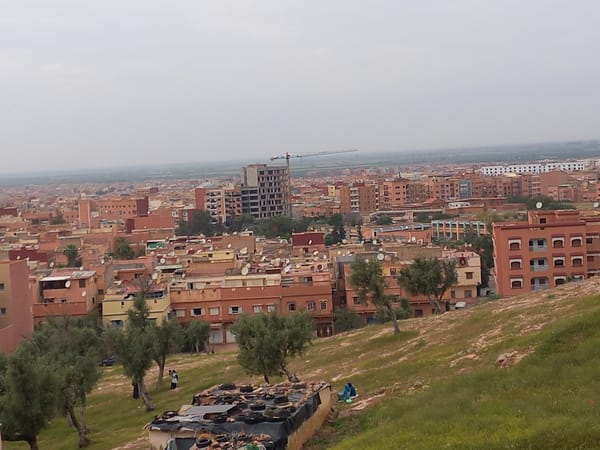
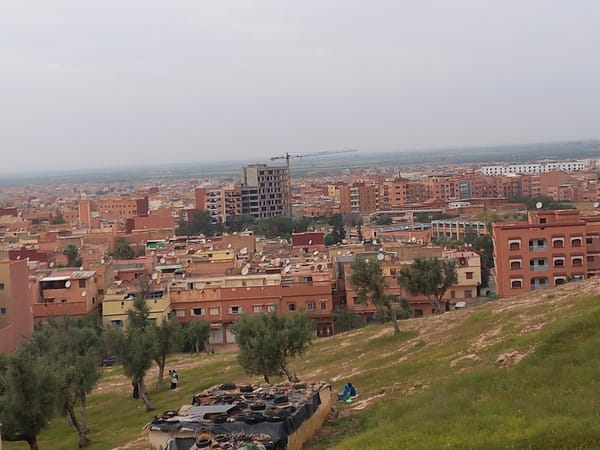
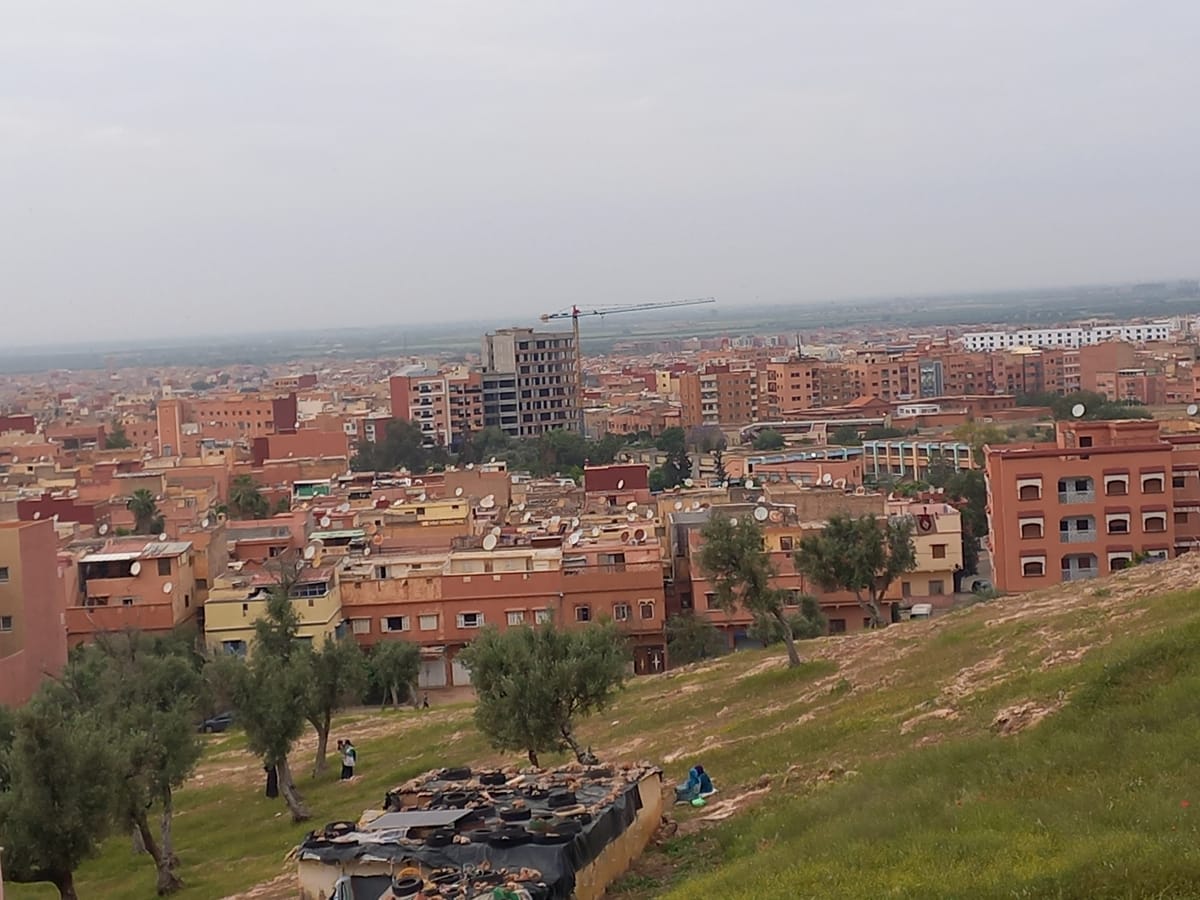
While the state demolishes in the capital region, the same pathology that created those neighborhoods — semi-informal housing, built with concrete and steel, sometimes with partial paperwork, often on land that should never have been built upon — continues to grow unchecked in Agadir, Beni Mellal, Meknès, Fès, Oujda, and dozens of smaller cities. The demolitions are not a policy. They are a reaction to visibility. And they solve nothing structurally.
The geographic pattern is revealing. The demolitions correlate almost perfectly with the host cities for the 2030 FIFA World Cup — Casablanca, Rabat, Tangier, Marrakech. Cities where international cameras will be pointed are being aggressively "cleaned up." Cities where semi-informal housing is equally entrenched — Fès, Meknès, Safi, Essaouira, Beni Mellal, Oujda — remain untouched. This is event-driven cosmetic surgery, not governance.
This analysis argues that Morocco's informal housing crisis cannot be resolved through conventional urban planning, police enforcement, or administrative reform — because it is not, at its root, an urban planning problem. It is a systemic corruption problem embedded in the very institutional architecture that was supposed to solve it. And it requires a response commensurate with its nature: the expansion of Morocco's intelligence mandate to address structural corruption as a national security threat.
The explosion of semi-informal housing over the past three decades is directly traceable to the transfer of urban planning authority from the centralized prefectoral system to elected communal councils — the collectivités territoriales (territorial communities). This decentralization, framed as democratic modernization, replaced a vertically disciplined system with one where the primary incentives of decision-makers are electoral survival and personal enrichment.
The crisis has metastasized into four interconnected pathologies: semi-informal housing itself; the contamination of the formal sector with illegal additions; the hodgepodge urbanism of successive authorizations that overload infrastructure; and the invasion of existing urban arteries by high-rise towers that capture public infrastructure value without contributing to its upgrade.
Nobody involved in this chain is entirely innocent — not the officials, not the speculators, and not the families who sought out intermediaries and paid bribes. The corruption is universal. This is precisely why retroactive prosecution is unworkable, and why a forward-looking reform anchored in intelligence capabilities is the only rational approach.
The full analysis develops five reasons why this is fundamentally an intelligence problem rather than a policing challenge: the problem is systemic, requiring network mapping; corruption networks are intertwined with legitimate political structures; the geographic scope demands territorial surveillance capabilities; corrupt actors have built their own protection networks requiring counter-intelligence to penetrate; and the reform process itself requires protection from sabotage.
The proposed solution architecture includes: sovereign-level strategic oversight through a small high-clearance committee; operational planning entrusted to the DGST operating through a security firewall; a national construction transparency dashboard fed by independent data streams including satellite imagery, with the critical principle that the entities being monitored cannot control the monitoring system; a parallel relocation transparency dashboard to prevent the solution from generating new injustice; the mandatory publication of all master plans and urban planning documents — currently kept secret, enabling insiders to profit from information the public never sees; a structural rule prohibiting construction outside planned neighborhoods; the urgent opening of new planned neighborhoods to absorb demand through formal channels; personal accountability documents signed by governors and commune presidents (رؤساء الجماعات) establishing baselines and forward responsibility; and free risk information booklets for prospective builders.
The architecture also includes: handwritten local permit boards updated daily in every commune — transparency at sidewalk level; surprise audits of local authorities modeled on military inspections; construction materials supply chain analysis as an early warning system; reform of the judicial-notarial registration chain; a realistic amnesty framework with a national priority triage plan for existing stock built on five criteria — urgency and danger, development trajectory, image and credibility, geographic scope beyond major cities, and resource realism — with each commune required to produce its own assessment; technology as the incorruptible backbone against pressure on intelligence services themselves; and positive incentive mechanisms including a national awareness day and annual recognition of the best-performing jurisdictions with verifiable metrics.
The analysis addresses the culturally specific protection guarantees required — where "protection" must mean not merely safety from retaliation but the guarantee of continued thriving — and the international dimension, including humanitarian exposure from demolitions and the management of allied concerns about intelligence reform. The protection framework must be anchored in a dahir (ظهير) — a sovereign act of the monarch carrying the highest constitutional authority — to ensure it survives changes in political configurations and personnel. A long read for those who take Morocco's future seriously.
▪ Full Analysis
In Casablanca and Rabat-Salé, bulldozers are tearing through neighborhoods right now. Families are watching their homes collapse into rubble — and with them, their livelihoods, their children's futures, their place in the city. The political cost is enormous. The human cost is worse. And yet, even as the state demolishes in the capital region, the same pathology that created those neighborhoods continues to metastasize in Agadir, Beni Mellal, Meknès, Fès, Oujda, and dozens of smaller cities across the kingdom. This is not a policy. It is a contradiction. And it will not be resolved by more demolitions, more urban planning commissions, or more speeches about régionalisation avancée (advanced regionalization). It will be resolved when Morocco recognizes this problem for what it actually is: a structural security threat that only its intelligence services are equipped to dismantle.
The Demolitions That Solve Nothing
Begin with what is visible. Across Morocco's largest cities, entire neighborhoods of semi-informal housing are being razed. The images are dramatic — concrete walls crumbling, families salvaging possessions, children standing in dust. The state presents this as urban renewal, as the correction of decades of anarchic construction. But look closer at what is actually being destroyed.
A house in these neighborhoods is rarely just a house. The ground floor is a shop, a workshop, an atelier, a garage — the economic engine of a family and often of an extended network. The upper floors house multiple generations. The building is a node in an informal economic ecosystem: childcare arrangements that allow mothers to work, apprenticeship networks, supply chains for small commerce. When the bulldozer arrives, it does not merely displace a family from one location to another. It shatters an entire livelihood architecture that took years, sometimes decades, to construct. Children are pulled from schools. Social networks dissolve. People who were poor but functional are thrown into outright poverty.
And who built those neighborhoods? Who issued the permits — or looked the other way when permits were absent? Who profited from the sale of subdivided land, from the construction materials, from the informal utility connections? Those actors keep everything. The state punishes the end of the chain — the family — while the system that produced the problem continues to operate, undisturbed, in the next town over.
But intellectual honesty requires a further nuance. The families at the end of that chain are not entirely innocent either. Many of them actively sought out corrupt officials and intermediaries. They paid bribes. They traded political favors — votes, attendance at rallies, silence when it mattered — in exchange for permits or for the assurance that no one would look too closely. They did this out of necessity, because the formal system offered them no viable path to shelter — but they did it knowingly. This matters not as a moral judgment but as a structural observation: the corruption chain has no purely innocent link. Everyone participated, from the رئيس الجماعة (commune president) at the top to the family that handed cash to an intermediary at the bottom. This is precisely why retroactive prosecution is unworkable — you would have to prosecute everyone — and precisely why a forward-looking reform is the only rational path. But it also means that going forward, a clear legal framework must responsibilize every actor in the chain, including citizens who solicit corrupt services. Whether through new legislation or the activation of existing but dormant legal provisions, the message must be unambiguous: the system has changed, and participation in corruption — at any level — carries consequences.
This is the first indication that conventional approaches have failed. You cannot solve a systemic problem by destroying its symptoms one neighborhood at a time, especially when the same system is generating new symptoms faster than the bulldozers can work.
How Decentralization Created a Monster
To understand how Morocco arrived at this point, you must understand a structural transformation that is rarely discussed honestly: the transfer of urban planning and construction authority from the centralized prefectoral system to the collectivités territoriales (territorial communities, الجماعات الترابية) over the past three decades.
Under the old system — when prefectures and provinces managed construction permits and land use through the wali (والي), the governor (عامل), and the caïd (قائد) apparatus — corruption existed. No serious analyst denies this. But that corruption was vertically disciplined. The Ministry of Interior operated a chain of command where an official who allowed too much disorder could be transferred overnight, sidelined, or worse. The corruption had ceilings imposed by a centralized hierarchy that valued territorial control and social order above individual enrichment. The informal housing that existed under this system was genuinely shanty — visible, identifiable bidonvilles (shanty towns) that the state could locate and, when it chose, address through rehousing programs.
What the successive waves of decentralization changed — from the Charte Communale (Municipal Charter) through the 2011 Constitution's régionalisation avancée (advanced regionalization) framework — was not just which institution decides, but the entire incentive structure governing those decisions.
When elected communal councils gained authority over urban planning documents — the plan d'aménagement (development plan), the autorisation de construire (building permit), the dérogation (zoning exemption) — you introduced decision-makers whose primary incentives are electoral survival and personal enrichment, not territorial order. An elected commune president (رئيس الجماعة) answers to a local constituency that includes the very people building semi-informally, and often to the notables (local power brokers) financing both the illegal construction and the electoral campaigns. The Ministry of Interior retained its tutelle (supervisory oversight) powers through the wali and governor, but the political signal from Rabat for twenty years was clear: let local democracy breathe. Do not micromanage. Allow the collectivités territoriales (territorial communities) to grow and learn from their mistakes.
This signal was interpreted — correctly — as permission to look away. And some of the Interior's own regional administrators discovered that the ambiguity created opportunities for them as well. They could extract rents from the confusion — a blind eye here, a facilitated dérogation (zoning exemption) there — without the direct accountability the old centralized system imposed. They benefit from the disorder without being its architects, and they can always point to the decentralization framework as their defense: we were told not to interfere.
The result is the explosion of semi-informal housing that now covers hundreds of thousands of structures across Morocco. And this housing is qualitatively different from the old bidonvilles (shanty towns). It is built with concrete and reinforced steel. It has some infrastructure — often with substandard connections to utilities. It sometimes has partially regularized paperwork. It looks like development. It can be photographed for campaign brochures. But it violates planning codes, occupies agricultural or non-constructible land, lacks properly dimensioned infrastructure, and creates irreversible urban chaos. Every earthquake — Al Haouz made this tragically, lethally visible — reveals the human cost of structures built outside engineering norms.
The Anatomy of a Crisis No One Wants to Name
The problem is not limited to what is conventionally understood as "informal housing." It has metastasized into at least four distinct but interconnected pathologies.
The semi-informal sector itself. Hundreds of thousands of structures built with varying degrees of illegality — from complete absence of permits to permits obtained through corruption for non-constructible land. These structures house millions of Moroccans. They represent an enormous stock of investment, however irregular, and they cannot simply be demolished without an alternative absorption mechanism for the population they shelter.
The contamination of the formal sector. This is the dimension almost nobody discusses, and it may be the most dangerous. When formally constructed buildings in legally constituted neighborhoods begin sprouting illegal floors, rooftop additions, and lateral extensions, the informal logic has colonized the formal system. The structural implications are terrifying — buildings engineered for two stories are carrying four. The Al Haouz earthquake exposed this in rural areas, but a significant seismic event in Casablanca, Fès, or Meknès would reveal identical vulnerabilities in neighborhoods that appear regulated on paper.
This contamination also delivers a devastating message about governance: even citizens who initially built legally have concluded that the system will not enforce its own rules. They see illegal construction around them facing no consequences, and they rationally decide to capture the same economic value. Every year the state fails to act, it trains more citizens to ignore the rules.
The hodgepodge urbanism of successive authorizations. A neighborhood is planned for two floors (R+2). After a few years, under demographic pressure or corrupt pressure or both, the same structures are authorized to add a third floor. Then a fourth. Each authorization generates administrative fees and, frequently, bribes. The streets were sized for the original density. The water and sewage infrastructure was dimensioned for a certain number of residents. The electrical grid was calibrated accordingly. None of it is upgraded. The result is neighborhoods that are functionally asphyxiated even though each individual building may have a valid permit. Streets become impassable for emergency vehicles. Fire trucks cannot access large portions of neighborhoods in Casablanca, Fès, and Salé right now. This is not a future risk. It is a present reality.
The high-rise invasion of existing urban arteries. Walk down Boulevard Mohammed V in Beni Mellal — or any major avenue in any Moroccan city — and you will see the same phenomenon. Developers purchase low-rise buildings or empty plots on main avenues and replace them with high-rise towers. Each tower is individually permitted. Each has its administrative file. Everything looks legal. And the cumulative result is an urban catastrophe in slow motion. The water mains underneath that boulevard were dimensioned for the original density. The sewage collectors, the electrical infrastructure, the telecommunications conduits — none have been replaced. The street width is unchanged. The intersections were not redesigned. The parking supply did not increase. A boulevard that was functional at its original scale becomes progressively paralyzed as each new tower adds hundreds of residents, dozens of vehicles, and commercial activity the surrounding infrastructure cannot support.
Who benefits from this vertical invasion? The developer, obviously — replacing a two-story building with a twelve-story tower on a prime avenue multiplies the land value by a factor of five or ten. The profit margins are enormous precisely because the developer captures the value of existing public infrastructure — the boulevard, the transit connections, the commercial visibility — without paying a centime (a single cent) for its upgrade. The elected officials who approve zoning changes and building permits benefit through direct corruption and political financing. Major developers are among the most significant financiers of political campaigns at both local and national levels. The administrative officials who provide technical approvals benefit at every step. The notaires (notaries), the banks, the construction materials industry — an entire economic ecosystem is structurally invested in maximizing construction volume regardless of urban coherence.
And the losers? Existing residents whose quality of life degrades year by year. Cities that inherit infrastructure deficits costing billions to address retroactively. Future generations who will inhabit urban environments that are congested, polluted, vulnerable to disasters, and hostile to human life at street level. We are building the security nightmares of tomorrow: circulation crises, evacuation impossibilities, air quality degradation, structural vulnerabilities that will exact their toll in the next seismic event, the next major fire, the next flood.
The Geographic Absurdity
There is a dimension to this crisis that reveals the intellectual bankruptcy of current policy: its geographic inconsistency. The Moroccan state is spending enormous political and financial capital demolishing semi-informal neighborhoods in Casablanca and Rabat-Salé while the identical phenomenon continues to expand, unchecked, in the peripheries of Agadir, in Beni Mellal, in Meknès, Fès, Oujda, and countless smaller cities.
This inconsistency is not accidental. It reveals that the current approach is not a policy but a reaction to visibility. Casablanca and Rabat are where foreign dignitaries visit, where international media is based, where the image of modern Morocco is constructed. The demolitions are cosmetic surgery on the capital region while the disease metastasizes everywhere else. No serious governance framework can justify demolishing Derb Rmad in Casablanca's old medina or razing L'Océan in Rabat while identical — sometimes worse — construction continues unimpeded in communes surrounding Agadir, Beni Mellal, or Oujda. The pattern reveals something the official discourse carefully avoids: the demolitions correlate almost perfectly with the host cities for the 2030 FIFA World Cup. Casablanca, Rabat, Tangier, Marrakech — the cities where international cameras will be pointed — are being aggressively "cleaned up." Meanwhile, Fès, Meknès, Safi, Essaouira, Beni Mellal, Oujda, and countless smaller cities where semi-informal housing is equally entrenched are left untouched. The state's own planning documents acknowledge that bidonvilles persist in Fès, Meknès, and other cities, yet no comparable demolition campaign is underway. This is not urban policy. It is event-driven cosmetic surgery — demolishing for the cameras while the structural disease continues to spread in every city that will not appear on a FIFA broadcast.
Prevention, Not Treatment: The Case for a National Dashboard
A house is a house. A construction site is a construction site. There is no legitimate reason for either to be shrouded in secrecy — unless something illicit is occurring that requires concealment.
A building permit is a public administrative act. A new construction is a physical fact visible to anyone who walks past. The opacity that currently surrounds construction across Morocco exists for one reason only: it protects the chain of complicity. The رئيس الجماعة (commune president) who signs the permit, the governor who does not intervene, the speculator who profits, the notaire (notary) who regularizes after the fact — all of them benefit from the fragmentation of information. The permit exists in the commune's files. The land title sits at the Conservation Foncière (Land Registry). The certificat de conformité (compliance certificate) — if it exists at all — is somewhere else. The actual physical construction may bear no resemblance to any of these documents. No single actor, and certainly no citizen, can easily assemble the complete picture. By the time anyone notices that an entire hillside has been illegally subdivided, it is a fait accompli (an established, irreversible fact) — too late politically and socially to reverse.
But the opacity runs deeper than fragmented files. In Morocco, there is no public master plan for any city, town, or territorial community. The plans d'aménagement (development plans), the plans de zonage (zoning plans), the schémas directeurs d'aménagement urbain (urban master plans) — the documents that determine where a city will grow, where infrastructure will be built, which land is constructible and which is not — none of these are publicly accessible in any meaningful way. They are not posted in public libraries. They are not available online. They are not provided when requested. There is no law, no rule, no administrative mandate that makes them public record. This is not an oversight. It is the foundational information asymmetry that makes the entire corrupt ecosystem possible. Those with connections — developers, speculators, officials, their families and associates — know where the city will expand before anyone else. They buy land cheaply on the periphery because they know its value will multiply when the plan is implemented. They avoid developing in low-margin areas. They avoid parcels where the state may exercise its right of expropriation. They operate with a map that the public is never allowed to see. The first act of any serious transparency reform must be to make every master plan, every planning document, every zoning decision a matter of public record — freely accessible, searchable, and permanently available.
The solution is a national construction transparency dashboard — a real-time, publicly accessible system that fundamentally disrupts the information asymmetry on which the corrupt ecosystem depends.
The operating principle is a presumption of publicity. Every construction permit application — not just approvals, but applications — becomes visible the moment it enters the system. The identity of the applicant. The parcel reference. The zone classification of the land. And critically, the identity of every official who touches the file at every stage. This creates a chain of accountability that currently exists nowhere in consolidated form.
Technology makes this transformative rather than merely aspirational. Morocco has access to high-resolution satellite imagery. A daily or weekly comparison layer that detects new construction activity — not permits, but actual physical changes to the built environment — creates an independent verification channel. When the satellite shows new construction where no permit appears on the dashboard, you have an automatic red flag. When a permit appears for land classified as non-constructible in the plan d'aménagement (development plan), another flag. The system generates alerts, not reports that sit in drawers.
The dashboard must also track vertical densification — not just new horizontal construction, but the addition of floors to existing structures. When a boulevard or neighborhood crosses a threshold where cumulative building height exceeds the capacity of underlying infrastructure, the system flags it automatically, regardless of whether individual permits are technically legal.
The critical institutional design principle: the entities being monitored cannot control the monitoring system. Neither the collectivités territoriales (territorial communities) nor the prefectures and provinces can operate this dashboard. They are precisely the actors whose behavior requires oversight.
The dashboard should be operated by a technically independent entity — perhaps housed under the Cour des Comptes (Court of Auditors) for institutional protection — with its data feeds coming from multiple independent sources: satellite imagery from one provider, permit data extracted automatically through a mandatory digital platform where communes cannot issue a permit without it appearing in the system, land classification data from the Conservation Foncière (Land Registry). No single actor controls all the inputs. No single actor can suppress inconvenient information.
This is not merely a transparency tool. It is a permanent structural instrument that makes the formation of future unsalvageable neighborhoods impossible. The current catastrophe becomes the last of its kind — not another episode in an endless cycle.
But transparency alone is insufficient without a structural rule change that eliminates the possibility of isolated, unplanned construction at its root. The principle should be absolute: no house is built unless it is part of a planned neighborhood, or unless it rehabilitates an existing structure within a planned neighborhood. This single rule, rigorously enforced through the dashboard, would make the semi-informal model structurally impossible. Construction outside a planned framework would have no administrative path to a permit — and the satellite monitoring layer would detect any attempt to build without one.
This rule, however, creates an obligation on the state: if you close the informal path, you must open a formal one wide enough to absorb the demand. Morocco must urgently launch the planning and opening of new neighborhoods across the country — not as a reaction to crisis, but as a proactive strategy to get ahead of the chaos. The fear that new planned neighborhoods will depress real estate markets is unfounded. The housing deficit is enormous and growing. The populations who currently resort to informal construction are not competing with buyers in the formal high-end market — they are an entirely different segment with different price points and different needs. Getting ahead of demand with planned, properly infrastructured neighborhoods is not a market threat. It is the structural precondition for making the dashboard's enforcement meaningful. Without a viable formal alternative, enforcement is simply cruelty.
Two complementary measures give the prevention framework its full reach.
First, a free booklet — printed and distributed to every prospective builder who approaches any commune, any notaire (notary), any construction materials supplier — that explains in clear, accessible language the legal, economic, social, and physical risks of informal construction. The booklet must be explicit: a house established as part of informal housing may be subject to demolition. Your investment is not protected. Your family's future is at risk. Your children's schooling will be disrupted. This is not a threat — it is a factual description of what has already happened to thousands of families across Morocco. The booklet shifts part of the responsibility onto the citizen, which is both fair and legally important: if the state has provided clear information about consequences, the claim of ignorance loses its force. Combined with the legal framework responsibilizing all actors in the corruption chain, the booklet ensures that going forward, no one can credibly say they didn't know.
Second, a measure of deliberate simplicity that complements the sophisticated national dashboard: a handwritten board, posted in the most visible public location in every commune, updated every twenty-four hours with a pen, listing every fresh construction permit issued — the name of the applicant, the parcel, the nature of the construction, and the officials who signed. No internet required. No digital literacy needed. No server to hack, no system to corrupt. A physical board that anyone walking past can read. This is transparency at its most human, most local, and most undeniable. Someone has to physically write it. Everyone can physically see it. It is almost impossible to corrupt because it is too visible and too simple. The national satellite dashboard monitors from above. The local handwritten board monitors from the street. Together, they close the surveillance loop from orbit to sidewalk.
Why This Is an Intelligence Problem
Every dimension of this crisis described above — the systemic corruption, the network of beneficiaries, the political protection structures, the geographic scope, the intertwining of illegal activity with legitimate political and economic institutions — points to a single conclusion: conventional governance tools cannot solve this problem. Police enforcement, administrative reform, urban planning revision — each has been tried, and each has failed. The question is why.
Police enforcement operates on a simple model: a law is broken, an infraction is identified, a sanction is applied. This model fails catastrophically for semi-informal housing because the problem is systemic, not episodic. Each illegal construction is not a discrete event but a node in an integrated network where elected officials, administrative authorities, land speculators, notaires (notaries), construction materials suppliers, and sometimes judicial actors all participate in an ecosystem with its own internal logic. Arresting one commune president changes nothing if the system that produced his behavior remains intact.
What is needed instead is the capacity to map the entire network — who finances whom, which political party protects which local operator, how money flows from informal construction profits into formal political campaigns, which administrative officials facilitate and in exchange for what. This is intelligence work, not police work.
Second, the corruption networks involved are intertwined with legitimate political and economic structures. The same notable who finances illegal subdivisions may be a member of parliament, a regional council president, or a significant employer. Police cannot investigate upward — they face institutional ceilings. They answer to a chain of command that includes the very Ministry of Interior whose local representatives may be complicit. Intelligence services, particularly domestic intelligence, can investigate laterally and upward because their mandate derives from national security, not from administrative hierarchy. They report through a chain that reaches the highest level of the state directly.
Third, the geographic scope of the problem requires capabilities that police forces do not possess. Monitoring construction activity across every commune in Morocco simultaneously is beyond any police force's operational capacity. But it is precisely the kind of territorial surveillance and pattern analysis that intelligence services already perform for conventional security threats. Satellite monitoring, network analysis, tracking of financial flows — these are intelligence methodologies applied to a different target set using existing capabilities.
Fourth — and this is perhaps the most important dimension — the political protection networks surrounding informal housing corruption require counter-intelligence techniques to penetrate. When a local operator knows that the caïd will warn him before any inspection, when the commune president has informants in the préfecture who alert him to inquiries, when a regional political leader can make a phone call and stop an investigation — these are counter-surveillance and information security problems. The corrupt actors have built their own informal intelligence networks to protect their activities. Only a professional intelligence service can operate inside and around those networks without being detected and neutralized.
Fifth, the reform process itself needs protection from sabotage. The moment any serious reform effort begins, the actors threatened by it will mobilize — politically, legally, through media, through social pressure. They will seek to identify who is behind the reform, who is providing information, who is vulnerable to pressure. Protecting the reform process, its sources, and its institutional sponsors is an intelligence function. Police cannot provide this. Only a service with experience in operational security, compartmentalization, and counter-intelligence can ensure the reform survives long enough to produce results.
Construction Materials: An Intelligence-Grade Early Warning System
Countries have long tracked construction materials flows to detect what other nations are building in secret. The same methodology, applied domestically, offers a powerful leading indicator for unauthorized construction.
Morocco's cement industry is concentrated among a relatively small number of producers. Abnormal delivery patterns to specific communes — spikes in cement, steel, and aggregate purchases that are inconsistent with authorized construction activity — would be detectable through supply chain analysis without requiring any cooperation from local authorities. This is precisely the kind of commercial intelligence analysis that domestic security services are equipped to perform: correlating commercial data with administrative records to detect discrepancies that signal illegal activity before a single unauthorized wall goes up.
The dashboard should integrate construction materials data as an independent input stream, cross-referenced with permit data and satellite imagery. Three independent data sources, each controlled by different actors, create a triangulation that is extraordinarily difficult for corrupt networks to defeat.
Surprise Audits: The Military Inspection Model
The dashboard provides continuous passive surveillance. But it must be complemented by an active enforcement mechanism: unannounced audits of collectivités territoriales (territorial communities) and préfectures (prefectures), modeled on military inspections or the surprise financial audits that corporations undergo.
These audits would arrive without warning — no advance notification, no time to prepare files, no opportunity to "regularize" what should never have been approved. An audit team, operating under the committee's authority and protected by the same operational security framework as the broader reform, would examine permit files, compare them against the dashboard's data, inspect construction sites flagged by satellite discrepancies, and interview officials under conditions where evasion is difficult. The comparison between what the commune's files show and what the satellite imagery reveals would be instantaneous and devastating to any attempt at concealment.
The psychological impact of surprise audits extends far beyond their immediate findings. Once local officials understand that an unannounced inspection can arrive at any moment — that the comfortable rhythm of corruption can be interrupted without warning — the calculus of risk changes fundamentally. The question shifts from "will I be caught eventually?" to "could I be caught today?"
Protecting the Watchers: Technology That Cannot Be Bribed
There is a vulnerability in this entire architecture that must be addressed with unflinching honesty: the DGST itself will face enormous pressure once its expanded role becomes understood. The actors threatened by the reform — developers, elected officials, political networks — will not simply accept being surveilled. They will attempt to compromise the surveillance apparatus itself: bribing officers, cultivating sources within the service, applying political pressure through their parliamentary and governmental connections.
This is why the ultimate backbone of the system must be something that cannot be bribed: geography and topography. Satellite imagery does not accept envelopes. Drone footage does not attend campaign rallies. Automated comparison algorithms do not have cousins who need business permits. The more the system relies on technology — on the objective, verifiable, incorruptible record of physical reality as seen from above — the more resilient it becomes against the human pressures that will inevitably be brought to bear.
But this creates a secondary imperative of the highest importance: the custodians of this technological infrastructure — the analysts who interpret the imagery, the engineers who maintain the systems, the administrators who control access to the data — must themselves be protected to the absolute limit. They are the final link between incorruptible data and actionable intelligence. If that link is compromised — through bribery, intimidation, or infiltration — the entire system fails regardless of how good the satellites are. Their protection, their vetting, their operational security must be treated with the same seriousness as the protection of the committee members themselves.
The Judicial-Notarial Chain: Where Illegality Becomes Irreversible
There is a critical step in the lifecycle of informal construction that transforms a reversible administrative violation into an irreversible legal fact: registration at the Conservation Foncière (Land Registry). Once a property title is registered — regardless of how the underlying construction was authorized or whether it was authorized at all — demolition becomes legally and politically exponentially more difficult. The notarial system and the Conservation Foncière (Land Registry) function, in practice, as a laundering mechanism that converts illegal construction into legal property.
The recent demolitions in Casablanca and Rabat-Salé revealed a bitter irony: registration proved to be no real protection for owners when the state decided to act. Titles were overridden. This creates a perverse situation: the registration system neither prevents illegal construction nor protects the families who relied on it in good faith.
A possible reform: a two-tiered registration system where titles that have passed through every level of verification — urban planning conformity, structural certification, infrastructure adequacy — receive full legal status, while titles that have not been fully vetted carry a visible flag indicating incomplete verification. This is drastic, but it transforms the registration system from a laundering mechanism into a transparency instrument. A flagged title has less market value, less collateral value for bank loans, and less legal protection in disputes. It creates enormous pressure on the notarial chain to verify properly before registering, rather than rubber-stamping documents for a fee. A concentration of flagged titles in a given area would also serve as an early warning signal for intelligence analysis: systematic irregularity made visible through the administrative system itself.
The Architecture of Reform
If this analysis is correct — if informal housing is a structural security threat requiring intelligence capabilities to address — then the reform architecture must reflect that reality. It requires three elements operating in coordination: strategic oversight, operational intelligence, and permanent transparency infrastructure.
Strategic oversight must come from the highest level of the state. This is not a matter that can be delegated to a ministry or an inter-ministerial committee. The interests at stake are too powerful, the resistance will be too fierce, and the sensitivity — both domestic and international — is too high for anything less than sovereign-level sponsorship and protection.
The oversight function requires a small committee — no more than five persons — selected by institutional logic rather than bureaucratic convention.
The first profile: an individual with deep expertise in intelligence operations, but positioned at oversight level rather than operational involvement. Critically, this should be someone whose professional domain is external rather than domestic — someone who understands intelligence tradecraft intimately but is not directly entangled in الشأن الداخلي. This separation ensures objectivity. This person oversees the intelligence reform without drafting it — and therein lies the elegance of the design.
The second profile: a figure with the institutional authority to audit financial flows and the personal integrity to confront impunity. The kind of official who has spent years documenting governance failures in meticulous official reports that produced no operational consequences — and who understands, better than anyone, exactly what enforcement capacity those findings have been missing.
The third profile: a diplomatic presence. A serious intelligence reform will inevitably raise questions among allied chancelleries, and a channel to manage those concerns must be ready before the reform begins, not improvised after the first leak.
The fourth and fifth profiles: one or two additional members of the highest trust, designated by the sovereign, who serve as the committee's link to the highest level. They report on progress, obstacles, and the institutional resistance that will inevitably materialize. At least one of these should be a figure whose counsel the sovereign has relied upon across different configurations of government — someone whose presence itself signals the seriousness and permanence of the undertaking.
The members of this committee must operate under the highest standards of secrecy and clearance. Their identities should be known only to the sovereign and to each other. Their mandate derives directly from the highest authority.
Operational planning should be entrusted to the Direction Générale de la Surveillance du Territoire (DGST), which possesses the most granular understanding of the country's internal dynamics — the law, the economic interests at national, regional, and local levels, the networks of influence and protection.
The DGST is the logical choice: it already maps domestic power structures for security purposes, it operates within a legal framework derived from national security mandates, and its reporting chain reaches the highest level of the state without passing through the administrative hierarchies that are themselves part of the problem.
The DGST should receive guidelines from the oversight committee but operate through a firewall: the identities of committee members are not revealed to the operational level. A single trusted intermediary serves as the contact point. The DGST planners are told clearly what is at stake, what is expected of them, and how far they can go — how bold the reform can be.
This firewall is not bureaucratic formalism. It is operational security applied to a reform that will face sophisticated resistance from actors with their own information networks.
The permanent transparency infrastructure — the national dashboard — operates as the structural guarantee that the old patterns cannot reconstitute after the initial intelligence-driven intervention. The intelligence services provide the investigative muscle to break the existing system. The dashboard provides the permanent replacement that prevents its return.
Personal accountability instruments must accompany the structural reforms. Every governor, every commune president, every official in the housing development chain should be required to sign a formal document establishing two things: the current state of informal housing under their jurisdiction as of a specific date — how many structures, what condition, what geographic distribution — and their personal responsibility and accountability for what happens from that date forward. This eliminates the perennial defense of every official confronted with informal housing in their territory: "I inherited this problem." Once the baseline is documented and signed, the question becomes simple and measurable: did it get better or worse on your watch?
Positive incentive mechanisms complete the architecture. A reform built entirely on surveillance, accountability, and threat will generate maximum resistance and minimum cooperation. The framework must also reward success. Two measures serve this purpose. First, the creation of a national awareness day for informal housing — an annual moment that normalizes the conversation, removes the stigma from discussing the problem publicly, and creates a political occasion where every official must show progress or explain failure. Second, the annual public celebration of the province or prefecture that achieved the most measurable progress against informal housing, the best-performing commune, and the best commune president — with real, verifiable metrics comparing the baseline documented in their accountability instrument to the current state. Recognition with transparent data creates competition between jurisdictions, gives ambitious and honest officials a reason to cooperate rather than resist, and demonstrates that the state values performance, not just compliance.
The Protection Problem
Any reform of this nature depends on the willingness of knowledgeable people to provide honest assessments and genuine counsel. In Morocco, this willingness is conditioned on guarantees that most governance frameworks fail to provide because they fail to understand what "retaliation" actually means in the Moroccan context.
Morocco is an ancient state. The المخزن — the deep structure of Moroccan governance — has existed in some form for centuries. Moroccans at every level of society have learned to read this state with extraordinary precision. They read signals from the Palace, from the Ministry of Interior, from local power brokers with an acuity that is, quite literally, survival knowledge passed through generations. This means that the people whose counsel is most valuable — those close enough to power to understand how the system actually functions — will not provide genuine advice unless they are certain of two things.
First, total protection from retaliation — and "retaliation" must be understood in its broadest Moroccan meaning. It does not mean merely being fired or prosecuted. It means being viewed unfavorably in future appointments or allocations of favor. It means family members and allies facing subtle obstacles — a cousin's business permit delayed, a brother-in-law's import clearance stalled, a child's scholarship application lost in bureaucracy. It means the quiet social warfare of Moroccan elite networks — a few well-placed insinuations at the right reception, a shift in how someone is greeted at official functions, the slow degradation of relational capital that is impossible to pin down but devastating in its effects. It means the long game — consequences that materialize five or ten years later under different configurations of power, when the current reform sponsors may no longer be in position. And it means the judicial dimension — fabricated legal complications, tax irregularities suddenly discovered, old files reopened.
The protection guarantee must cover the entire ecosystem around each cooperator — personal, familial, economic, social, and judicial — and it must be institutionalized in a way that survives changes in personnel.
But protection must mean more than the absence of harm. A cooperator who is shielded from retaliation but finds themselves frozen in place — passed over for appointments, excluded from opportunities, kept safe but kept small — has not been protected. They have been neutralized.
True protection means guaranteeing that those who serve the reform can continue to thrive: to be appointed to positions of responsibility, to advance in their careers, to compete fairly for opportunities, to grow. Protection that merely prevents destruction while allowing stagnation is a subtler form of punishment, and in the Moroccan context, it would be read as such — instantly and universally.
This may require a sovereign-level instrument — a dahir-level (ظهير — a sovereign act of the monarch, higher in constitutional authority than a royal decree / مرسوم ملكي) guarantee that carries the weight of the monarchy as an institution, not merely the current configuration of advisors — and that explicitly frames cooperation with the reform as service to the state deserving of recognition, not merely tolerance.
Second, the people whose advice matters most must believe that the highest level genuinely wants to hear the truth — even when that truth is uncomfortable, even when it implicates people close to power. This is not unique to Morocco. It exists in every system where power is concentrated. But in Morocco, the cultural reading of state intentions is so refined that any ambiguity in this signal will be interpreted as a signal to self-censor. The committee's mandate must be unmistakable.
The Amnesty Framework
Some neighborhoods, as we have acknowledged, are beyond salvage. The structural compromise, the impossible density, the absent infrastructure — no amount of regularization can make them safe or livable. These must be demolished, with rehousing that preserves the economic ecosystem of the displaced families — meaning relocation within the same area, not deportation to peripheral housing projects kilometers from livelihoods and schools and social networks.
But for the vast majority of existing semi-informal structures, the approach must be different. Morocco has a historical precedent that is instructive. At independence, the new state faced a choice regarding those who had collaborated with the colonial power. It chose not to pursue them, not to confiscate their property, not to tear the country apart with recriminations. The calculation was pragmatic: the cost of retroactive justice exceeded the cost of amnesty. France itself made the same calculation with those who had collaborated with the German occupation — notwithstanding some media spectacle to satisfy public anger.
The same logic applies here. The reform should draw a clear line: going forward, the new transparency and intelligence infrastructure makes continued corruption in construction impossible. But retroactively, existing structures are assessed on structural safety, not legality of origin. What is structurally sound is regularized — proper titling, infrastructure upgrading, integration into formal urban planning. What is genuinely dangerous is replaced through rehousing. No confiscation. No prosecution for past construction irregularities. The message is: we are stopping the bleeding, not reopening old wounds.
This is not weakness. It is the only wise approach to protect the country from internal disruption and from the external exploitation that retroactive campaigns would invite. It is, in fact, precisely the approach that requires the intelligence dimension — because only intelligence services can credibly guarantee that the new system is truly enforced, making the amnesty for the past meaningful rather than merely a pause before the next cycle of corruption.
But amnesty without an operational plan is merely a declaration. The existing stock of semi-informal housing — hundreds of thousands of structures across the country — cannot be addressed all at once. It must be triaged rationally, through a national priority plan built on clear, defensible criteria.
The first criterion is urgency and danger. Structures that pose an immediate threat to human life — those in seismic risk zones, on flood-prone land, built with materials or methods that make collapse likely — must be addressed first. This is not a policy choice. It is a moral obligation. The next Al Haouz should not find the state still debating priorities.
The second criterion is development trajectory. Which informal structures stand in the path of future urban development — planned infrastructure, road expansion, public facilities? These must be addressed early not because the structures are worse than others, but because delay makes resolution exponentially more expensive and politically difficult. A structure that today blocks a future highway corridor will cost ten times more to remove in five years when a family has deepened its roots and the political constituency around it has hardened.
The third criterion is image and credibility — both local and national. Some informal developments are so visible, so prominent in their disfigurement of a city's landscape, that they undermine the credibility of any reform effort. If the state announces a comprehensive plan but the most visible eyesores remain untouched, the public — and international observers — will conclude the reform is performative. Addressing high-visibility cases early builds the credibility capital the reform needs to sustain itself politically.
The fourth criterion, too often neglected, is geographic scope. The priority plan must not focus exclusively on major urban centers. Small towns and villages across Morocco face the same pathology, often with even less institutional capacity to address it. A reform that addresses Casablanca and Rabat while ignoring the semi-informal sprawl around secondary cities and rural communes will repeat the geographic absurdity of current demolition policy.
The fifth criterion is resource realism. The state's capacity — financial, administrative, logistical — to conduct rehousing, regularization, and infrastructure upgrading is finite. The priority plan must sequence interventions according to what can actually be executed well, not what would be ideal in theory. A smaller number of interventions done properly — with transparent relocation processes, genuine livelihood protection, and community engagement — will achieve more for the reform's credibility and sustainability than a large number done badly.
This priority plan should not be imposed entirely from the center. Each commune should be required to produce its own assessment and its own plan for the existing stock within its jurisdiction — how many structures, what condition, what priority order, what resources needed. These local plans would then be reviewed, validated, and integrated into the national framework by the oversight committee and the DGST. This serves two purposes: it forces local officials to confront the reality of what they have allowed to accumulate under their authority, and it generates ground-level intelligence that no satellite or national database can provide. The quality and honesty of each commune's plan would itself become a metric of that commune's willingness to engage with the reform — another data point for the surprise audit teams and another basis for the annual performance recognition.
The sequencing matters enormously. The intelligence mapping must precede the dashboard deployment, which must precede the amnesty announcement. If the amnesty is announced before the monitoring system is operational, the incentive logic is predictable: a massive rush to build and establish facts on the ground before enforcement begins. This is the consistent pattern observed in regularization campaigns worldwide — announce forgiveness before surveillance, and rational actors race to create new irregularities under the amnesty window. Morocco cannot afford to repeat this dynamic. If the dashboard goes live before the intelligence services have mapped the existing networks, the corrupt actors will have time to adapt, to find workarounds, to compromise the system before it can function.
The Relocation Dashboard: Preventing the Solution From Becoming the Next Problem
Where demolition is unavoidable — where neighborhoods are structurally beyond salvage — the relocation process itself must be subjected to the same transparency logic as the construction monitoring dashboard. Without this, relocation becomes a new vector of corruption, favoritism, and injustice. History shows, in Morocco and everywhere else, that rehousing programs conducted in administrative opacity generate their own pathologies: favoritism in beneficiary selection, opaque criteria for priority, unexplained financial demands imposed on vulnerable families, and politically connected individuals capturing benefits meant for the genuinely displaced.
The solution is a second public dashboard — a relocation transparency platform — that makes the entire process visible in real time. This dashboard would display: the complete list of persons and families affected by a relocation operation; the status each family claims — their tenure, their economic situation, the nature of their occupancy; how the authorities have classified each case, with the criteria and evidence supporting the classification; who among the affected will benefit from relocation and, critically, the justification for why; the priority order — who is relocated first and on what basis; and when financial contributions are required from affected families, the precise rationale, calculated transparently and applied uniformly.
This is not a secondary administrative matter. It is an integral component of the reform. Every relocation operation that goes badly — every family that is treated unjustly, every case of favoritism, every unexplained delay — becomes ammunition for those who oppose the reform, both domestically and internationally. The intelligence services must advocate for this relocation dashboard as part of their mandate, not as an afterthought managed by local authorities. Because the same networks of local corruption that created the informal housing problem will attempt to capture the relocation process: steering benefits to allies, imposing costs on adversaries, using the displacement as leverage for political loyalty.
The construction monitoring dashboard prevents new problems from forming. The relocation dashboard prevents the solution to old problems from generating new injustice. Together, they create a governance framework where transparency is not a slogan but an operational reality at every stage — from prevention to remediation.
The International Dimension
A reform of this magnitude cannot be conducted in isolation from Morocco's international environment — and the international dimension is more complex than most analysts acknowledge.
The most immediate exposure is humanitarian. When demolitions produce incidents — and they will, because demolitions always do — Morocco's adversaries will weaponize them. Human rights organizations, foreign media, hostile governments will frame these incidents as evidence of abuse, of injustice, of a state that brutalizes its own citizens. Some of these actors are waiting for Morocco to make precisely these mistakes.
The reform must anticipate this exposure and build in protections: transparent rehousing processes, community engagement, documented guarantees for displaced families. The intelligence services play a role here too — anticipating which actors will exploit which incidents and preparing counter-narratives before they are needed.
But the deeper international concern is different. A significant reform of intelligence mandates — even for entirely legitimate domestic purposes — will generate anxiety among Morocco's allies before it concerns its adversaries. France, Spain, the United States, and other countries with deep intelligence relationships with Morocco will detect that something is changing. The secrecy necessary to implement the reform will itself become a source of concern.
Allied intelligence services will want to understand the scope and purpose of the restructuring. Are the expanded domestic capabilities going to be used for purposes beyond construction corruption? Is this the beginning of a broader shift in how Morocco's security apparatus operates internally?
These concerns are legitimate, and a diplomatic channel to manage them must be ready before the reform begins. This is not about asking permission. It is about preventing misunderstanding from becoming opposition. The committee's diplomatic member exists precisely for this function: to communicate, through appropriate channels, the scope and purpose of the reform in terms that reassure allies without compromising operational security.
There is also a strategic opportunity here. Morocco positioning itself as a pioneer in technology-driven transparent governance — using intelligence capabilities not for repression but for accountability — is a powerful narrative. It preempts the authoritarian-overreach critique. It positions Morocco as a model for the African continent and the Arab world. And it aligns with the expectations of international financial institutions whose investment and partnership Morocco actively courts.
What This Is Really About
This analysis began with bulldozers in Casablanca and ends with a proposal for fundamental reform of how Morocco's intelligence services relate to domestic governance. The distance between those two points is shorter than it appears.
Informal and semi-informal housing is not a housing problem. It is a governance problem. It is a corruption problem. It is a security problem. It is a problem that has resisted three decades of conventional policy approaches because those approaches treat symptoms while the underlying system — the network of incentives, protections, and complicity that spans from local communes to national politics — remains untouched.
The expansion of the intelligence mandate proposed here is not a power grab. It is the logical, necessary, and ultimately most humane response to a crisis that conventional tools have proven incapable of resolving. Intelligence services bring capabilities no other institution possesses: network mapping across jurisdictions, the ability to investigate upward without institutional ceilings, territorial surveillance at the scale the problem demands, counter-intelligence against corruption's own protection networks, and the operational security to protect the reform itself from sabotage.
Combined with a permanent transparency infrastructure — the national dashboard — and a realistic amnesty framework that draws a line between past and future, this approach offers Morocco something that no previous policy has provided: not just a response to the current crisis, but a structural guarantee that the crisis will not reproduce itself.
The Moroccan state is old enough and sophisticated enough to know that the hardest reforms are not those that require force, but those that require honesty about the state's own failures. This reform demands that honesty. It demands that the highest levels of the state acknowledge that decentralization, as implemented, created a permissive environment for corruption that has disfigured Morocco's cities and endangered its citizens. And it demands that the institutions best equipped to address the problem — the intelligence and security services — be given the mandate, the resources, and the protection to do so.
The alternative is more bulldozers, more destroyed livelihoods, more children thrown into poverty, more geographic absurdity where one city is demolished while the next is allowed to fester — and more earthquakes, more fires, more floods that reveal, with terrible clarity, the cost of building a country on foundations that no one was watching.
Umbrax is the analytical voice of SecurityNak.com, covering security architecture, intelligence reform, and governance challenges across North Africa and the MENA region.
© 2026 SecurityNak.com — This work represents original analytical research. Citation with attribution is welcome. Reproduction in whole or in part requires written permission. Contact: info@securitynak.com