
The Risks of Unregulated Small Aircraft Overflights in Morocco's Urban Areas: A Call for Enhanced Aviation Security Measures Measures
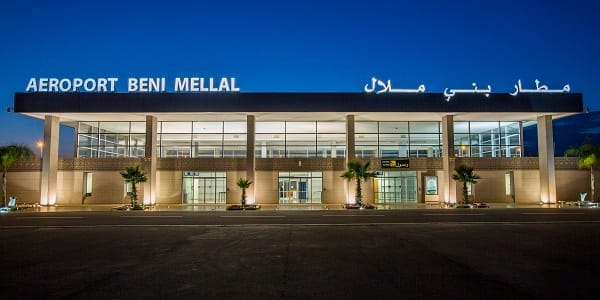
In an evolving threat landscape, the unrestricted overflight of small aircraft over densely populated urban centers represents a notable vulnerability that warrants close attention. This analysis centers on the Moroccan context, using Beni Mellal as a focal case study, and argues for prohibiting such flights over high-density zones to avoid the gradual normalization of risks. Over time, routine acceptance of these operations can dull both public awareness and institutional vigilance, potentially delaying recognition of a serious incident until after it occurs. As an emerging economy with growing geopolitical exposure, Morocco has a clear imperative to strengthen airspace governance proactively—before complacency becomes costly.
Small Aircraft Operations Over Beni Mellal: An Overview
Beni Mellal, a key regional center in Morocco's interior with a population exceeding 200,000, hosts an airport (ICAO code: GMMD) that accommodates diverse aviation activity. The aircraft involved are mainly light propeller-driven types—such as Cessnas and comparable single-engine models—employed for private charters, agricultural surveys, flight training, and regional travel. Turboprops and small business jets also appear in the area, typically for domestic links or short-haul operations. These flights frequently pass at altitudes close enough to interact with urban environments, where tight residential and commercial clustering heightens the potential consequences of any failure.
As a smaller regional airport, Beni Mellal is not fortified to the standards of major international gateways. Its perimeter fencing provides only a basic physical barrier, offering limited deterrence against determined unauthorized access. Compounding this, the facility serves as a hub for recreational and hobbyist aviation, including gliding, parachuting, private flying, and aeroclub operations. The presence of casual, leisure-oriented users can inadvertently contribute to relaxed adherence to rigorous security and procedural standards, amplifying operational risks and fostering a culture of complacency among participants and nearby observers alike.
Although these activities may seem routine, their regularity in Beni Mellal highlights a wider regulatory shortfall. Reports from the area suggest such overflights are fairly common, especially where agricultural lands border urban zones. This localized pattern reflects vulnerabilities that appear in other secondary Moroccan cities and merits systematic review.
Extrapolation to Broader Moroccan Contexts
What is observable in Beni Mellal extends readily to Morocco's principal urban areas—Casablanca, Marrakesh, Rabat, Fez, and others. National aviation growth, fueled by tourism recovery, trade expansion, and infrastructure investment, is driving higher volumes of small aircraft. In coastal destinations like Agadir and Essaouira, charter services and scenic tours routinely cross populated corridors. Rapid urban development further compresses the margin between flight paths and dense settlements.
Left unaddressed, this trend risks embedding complacency throughout the security ecosystem. A vulnerability tolerated in one region can cascade across the national network, threatening economic continuity. Morocco's rising profile as an emerging market makes these gaps particularly concerning, as external actors—state or non-state—may view them as exploitable soft points in critical infrastructure protection.
Comparative International Approaches
Many countries have adopted layered controls to manage these exact risks. In the United States, Federal Aviation Administration (FAA) rules mandate minimum altitudes of 1,000 feet over congested areas, coupled with restricted airspace designations around major population centers. Reforms following 2001 further introduced no-fly zones over key sites and bolstered small-aircraft surveillance. Within the European Union, states like France enforce low-altitude restrictions in urban settings while integrating security and environmental priorities into policy.
The International Civil Aviation Organization (ICAO) establishes core requirements, including safe separation from populated areas (generally 1,000 feet minimum). Morocco complies with ICAO standards via its Directorate General of Civil Aviation (DGAC), but application to small aircraft remains uneven. Incorporating proven elements—such as mandatory real-time tracking and defined urban no-fly corridors—from U.S. or EU frameworks would materially reinforce domestic arrangements.
Threat Assessment: Terrorism and Operational Risks
The dangers tied to unregulated small-aircraft overflights span multiple dimensions. At the baseline, accidental events—mechanical breakdowns, pilot misjudgment, or loss of control—carry elevated probability in light aircraft compared to commercial jets. An incident over a crowded urban area could produce substantial casualties and secondary damage to infrastructure.
More gravely, intentional misuse remains a persistent concern. Small planes offer pathways for targeted attacks, dispersal of hazardous materials (explosives, chemicals, or biological agents), or pre-operational reconnaissance. Morocco's security services have consistently disrupted plots linked to extremist networks, demonstrating active intent; permissive airspace would lower the bar for such exploitation. Low-altitude approaches could bypass many conventional countermeasures, magnifying harm in densely occupied spaces.
Other vectors include smuggling facilitation and hybrid threats from adversarial actors. In a regional environment marked by competition, these exposures could undermine national stability and investor confidence.
Legal and Institutional Framework
Moroccan aviation regulation, led by the Directorate General of Civil Aviation (DGAC) under the Ministry of Equipment, Transport, Logistics, and Water, conforms to ICAO Annex 2 requirements for safe operations and altitude minima. No categorical ban currently applies to small aircraft over urban zones; oversight depends on general permitting processes.
Sovereignty over airspace is affirmed internationally by the Chicago Convention, assigning primary enforcement to the state. In Morocco, responsibility is shared:
- The Ministry of Interior oversees national security coordination and crisis management.
- The General Directorate of National Security (DGSN) manages urban policing and routine law enforcement.
- The Royal Gendarmerie handles rural, border, and non-urban aviation monitoring.
- The General Directorate of Territorial Surveillance (DGST) serves as the lead domestic intelligence and counterterrorism body.
- The General Directorate of Studies and Documentation (DGED) focuses on external intelligence and strategic analysis.
- The National Airports Office (ONDA) administers airport infrastructure.
- Regional wilayas support localized coordination.
This distributed model is robust in concept but can encounter practical coordination challenges when tracking non-commercial, low-altitude general aviation.
Recommendations and Urgency
Closing these gaps requires prompt, targeted action:
- Prohibit small aircraft overflights above densely populated zones, allowing narrowly defined exceptions only for emergencies or missions pre-approved by the DGAC.
- Mandate Automatic Dependent Surveillance-Broadcast (ADS-B) equipage and real-time tracking for all small aircraft.
- Define urban airspace buffers and upgrade radar coverage, starting with secondary airports like Beni Mellal.
- Strengthen inter-agency information-sharing protocols, enabling DGST and DGED to incorporate aviation-derived intelligence into national threat pictures.
- Institute periodic security audits, tabletop exercises, and live simulations to validate response readiness.
These measures are not optional precautions—they are essential to addressing a gap that could be exploited with severe consequences. The urgency stems directly from Morocco's trajectory: greater prominence invites greater scrutiny and potential targeting. Postponement increases the likelihood that reforms follow rather than precede an adverse event.
Probability Analysis
Global aviation data and Morocco's strong counterterrorism performance indicate that the near-term probability of a major incident remains low. Nevertheless, the consequences would be disproportionately severe. Recent years' foiled plots confirm ongoing adversary interest. Absent intervention, rising flight volumes and entrenched complacency will steadily elevate cumulative risk over time.
Security practitioners and responsible agencies should press these enhancements through appropriate policy channels. Effective airspace control not only neutralizes immediate vulnerabilities but also reinforces Morocco's resilience in an unpredictable regional setting.