
Reforming Intelligence Oversight in Morocco: A Strategic Dialogue on Accountability, Technocratic Expertise, and Palace-Led Evolution
Morocco's intelligence services operate without oversight. Can accountability be introduced without triggering resistance or foreign sabotage? Umbrax's palace-led framework: build capacity first, prioritize STEM expertise, frame as royal modernization. Strategic necessity.
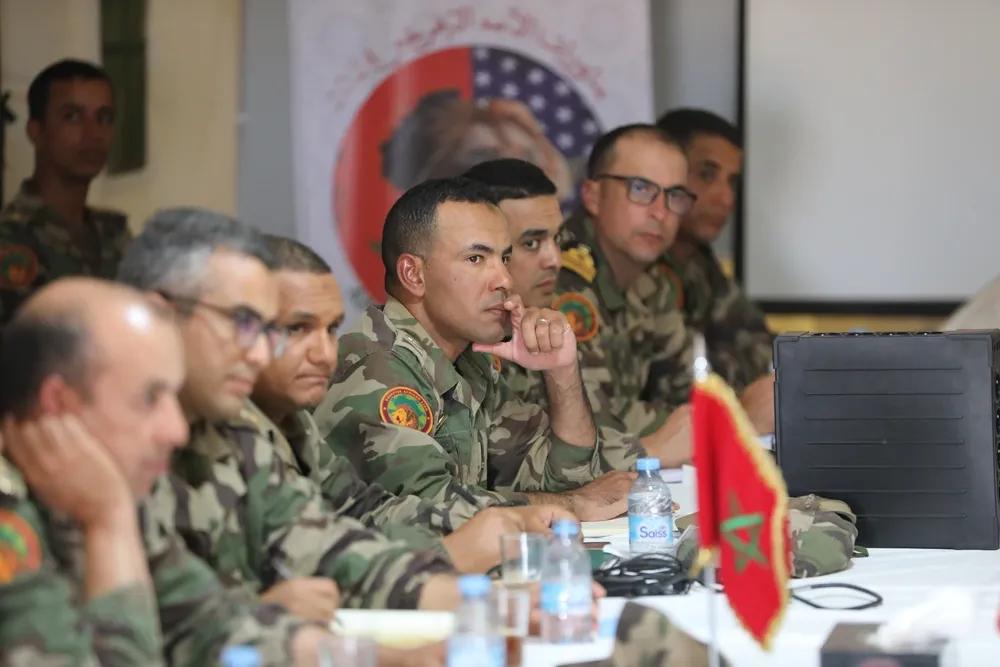
A Policy Framework
Umbrax and Claude, February 2026
Executive Summary
Morocco's intelligence services—the DGED (external) and DGST (domestic)—operate as sovereignty departments under direct royal authority, exempt from the democratic oversight that has evolved across other state institutions since 2011. This dialogue examines whether and how Morocco can introduce intelligence accountability without compromising operational effectiveness.
The framework emerged from extended conversation. Umbrax developed the core strategy: oversight must come exclusively from the monarchy, must build intellectual capacity before creating institutions, and must proceed through deliberate phases spanning 2026-2040. The approach combines STEM-driven expertise with legal safeguards, addresses resistance from entrenched interests, and confronts intelligence influence over political life. This isn't an imported Western model—it's a pathway grounded in Moroccan realities, gradualist and palace-orchestrated.
I. The Governance Challenge
Morocco's Intelligence Architecture
Morocco's intelligence apparatus is fragmented across multiple services with overlapping mandates. Two dominate strategic intelligence:
Primary Services
DGED (Direction Générale des Études et de la Documentation): External intelligence under Mohammed Yassine Mansouri, established 1973. Recent successes include supporting Nigerian forces against Boko Haram leadership, securing Sahel hostage releases, and building partnerships across West Africa. The FBI and CIA formally commended the DGED in 2021 for counter-terrorism cooperation.
DGST (Direction Générale de la Surveillance du Territoire): Domestic intelligence under Abdellatif Hammouchi since 2005. Hammouchi has simultaneously directed the DGSN (national police) since 2015—an unprecedented consolidation of domestic intelligence and law enforcement under single leadership. The DGST includes the BCIJ (counter-terrorism) and PCR (signals intelligence).
Additional Capabilities
Other intelligence capabilities exist beyond DGED and DGST. The military has capabilities that are not DGED. Forces Auxiliaires have capabilities. Some capabilities are directly attached to the King and are not DGED and DGST.
Military Intelligence: The Royal Armed Forces (FAR) maintain intelligence units within operational commands. About 60% of DGED employees come from FAR, but military intelligence collection operates independently.
Forces Auxiliaires (FA): Paramilitary gendarmerie under Interior Ministry control but commanded by FAR officers. Deployed across Morocco with intelligence collection focused on rural security, border surveillance, and local threats. Particularly active in Western Sahara and border regions.
Royal Gendarmerie: Military force with law enforcement jurisdiction in rural areas. Maintains intelligence on territorial security, organized crime, and border control.
Direct Royal Intelligence: Capabilities attached to the Royal Cabinet operate outside DGED/DGST structures. These handle palace security, royal family protection, and strategic intelligence briefings to the King.
Interior Ministry Territorial Intelligence: Through governors (walis), district administrators (caïds), and municipal authorities (pachas), the Interior Ministry maintains extensive information networks. Local administrators report on social tensions, political movements, economic conditions, potential instability. Though DGST falls under Interior Ministry supervision, this territorial apparatus operates independently.
Customs Intelligence (ADII): Investigation units targeting smuggling, contraband, customs fraud, cross-border economic crime. Coordinates with DGST on security cases.
Financial Intelligence (UTRF): Anti-money laundering and terrorism financing unit under Treasury/Finance Ministry. Analyzes financial transactions and coordinates internationally.
What This Means for Oversight
This multiplicity creates coordination challenges:
- No unified structure: Morocco lacks a single coordinating authority below the King. DGED and DGST cooperate but overlap; military intelligence operates independently; territorial intelligence flows through administrative channels.
- Oversight must address multiple streams: A parliamentary committee focused solely on DGED/DGST would miss significant intelligence activity by FAR, Forces Auxiliaires, Interior Ministry networks, and royal services.
- Hammouchi's dual role creates partial consolidation: Domestic intelligence and policing are unified, but military and territorial intelligence remain separate.
Any oversight framework must eventually cover DGED and DGST (primary focus), military intelligence (coordination with defense committees), Interior Ministry territorial intelligence (distinguishing governance information from political surveillance), and financial/customs intelligence (specialized oversight). Direct royal intelligence would remain outside parliamentary oversight but subject to internal audits and inspector-general reporting to the Palace.
The phased approach below addresses how to build this comprehensive coverage gradually.
Sovereignty Department Status
As Umbrax noted: "Morocco distinguishes what it calls sovereignty departments under the unique authority of the King." DGED, DGST, and core military intelligence function as sovereignty departments—alongside Interior, Defense, Foreign Affairs, and Islamic Affairs—answerable directly to King Mohammed VI rather than through ministerial or parliamentary channels. This structure has served Morocco well: insulating intelligence from partisan politics during institutional development, maintaining operational secrecy, enabling rapid decisions, and preserving unified royal command.
Why Oversight Now?
Democratic Maturation
Umbrax observed: "The democratic evolution of Morocco is a fact. Yet some departments of the Moroccan state are not subject to any oversight, even cursory one." Morocco's 2011 Constitution enhanced civil liberties, strengthened parliament, and created institutions like the CNDH (National Human Rights Council). Citizens increasingly expect accountability across state functions. The Hirak and Generation Z movements showed how far the parties drifted from the masses, demonstrating societal demands for transparency that bypass traditional parties entirely.
The Need to Begin
As Umbrax put it: "Times are changing and Morocco finds itself in need to have some oversight of its intelligence services, or at least to start."
Operational Legitimacy
Extended opacity risks internal drift, inefficiency from lack of external challenge, and erosion of public trust. Properly designed oversight aligns intelligence with broader national interests, prevents mission creep, and improves long-term effectiveness through structured expert review.
Western Partnership Requirements
Umbrax emphasized: "Morocco has deep interest with the West (Europe, America, even with countries like: Canada, Japan, South Korea). It does help to be seen as a democratic country and it helps economic and political agreements and cooperation at many levels. So for Morocco to initiate reforms (oversight) is not just a luxury it is a necessity in the long term."
Geopolitical Context
Morocco's intelligence modernization occurs in contested space. Western Sahara diplomatic victories (US recognition 2020, French recognition 2024) and security diversification through Israel partnership (post-2020 normalization) have generated strategic anxiety among traditional European partners. Morocco needs capabilities that protect sovereignty while maintaining partnerships that demand accountability.
II. The Comparative Question: Is Democratic Oversight Necessary?
Umbrax challenged: "Is the oversight needed? And here the Chinese model working efficiently is a challenge to any assumption claiming democratic oversight is a necessity."
The Chinese Model: Efficiency Through Party Mechanisms
Structure
China's intelligence operates under unified Communist Party oversight via the Central National Security Commission (under Xi Jinping) and internal discipline mechanisms. As Umbrax observed: "The communist party of China is full of scientists." The CPC features STEM-heavy leadership (engineers, scientists) and tool-based deliberations using data models and simulations. Intelligence services—MSS (civilian), PLA military intelligence, provincial security bureaus—answer to party structures, not independent legislative bodies.
Performance
The system delivers rapid mobilization, whole-of-society intelligence collection, cyber dominance, and economic espionage at scale. Decision cycles are compressed, operational security maintained, regime priorities immediately resourced.
Limitations
China's model optimizes for regime stability and party-defined strategic objectives. The absence of external checks enables documented human rights violations (Xinjiang surveillance), wasteful inter-agency duplication, and occasional failures when internal fear stifles honest reporting. Efficiency is narrowly defined: regime preservation succeeds, but external legitimacy remains limited and course correction depends entirely on internal party mechanisms.
Relevance to Morocco
Morocco isn't pursuing single-party permanence. It has chosen gradual democratic opening within monarchical continuity. Exempting intelligence from institutional evolution while other state functions undergo reform risks creating autonomous power centers precisely as society demands greater transparency. Even the CPC's internal oversight mechanisms (Central Commission for Discipline Inspection, Political and Legal Affairs Commission) recognize accountability necessity—the question is whether external or purely internal.
Western Parliamentary Models
United States
Senate Select Committee on Intelligence (SSCI) and House Permanent Select Committee on Intelligence (HPSCI) conduct closed-door oversight: budget authorization, operational review, investigation of abuses. Composition is lawyer-heavy, emphasizing legal compliance, civil liberties, statutory frameworks. Strengths include preventing abuses (post-Snowden reforms), building public legitimacy, ensuring intelligence alignment with constitutional principles. Weaknesses include politicization, leak vulnerability, decision gridlock.
United Kingdom
Intelligence and Security Committee (ISC) comprises parliamentarians with security clearances conducting retrospective reviews and budget scrutiny. Strict confidentiality protocols, limited public reporting.
Composition Contrast: Technocratic vs. Legalistic
Umbrax identified this critical difference: "How much the US Congress is full of men of law. The communist party of China is full of scientists. US solutions at problems is throwing laws at them. Communist party is long discussions involving all kind of tools. The verdict: the fast progress of China and the recent struggle of US economy and society."
CPC leadership includes scientists and engineers favoring tool-rich, data-driven deliberations enabling rapid execution. US Congress comprises primarily lawyers whose solution framework defaults to statute creation and legal process. China achieves speed and innovation but risks opacity and correction deficits. The US ensures rights protection and checks but encounters paralysis and procedural delays.
For Morocco: a hybrid approach integrating STEM analytical rigor with legal safeguards offers a middle path—evidence-based review without authoritarian closure or democratic gridlock. This blending—combining technical/scientific expertise with legal frameworks—is what Umbrax meant when he stated: "I think blending is not a choice any more. Science and technology is now and the future, and society cannot live without them."
Jordan: Cautionary Tale from a Fellow Monarchy
Jordan provides the closest structural parallel: constitutional monarchy, bicameral parliament, intelligence services (GID) under direct royal authority.
Oversight Absence
Jordan has no parliamentary intelligence committee despite decades of reform commissions. The GID director is appointed by the King, reports nominally to the Prime Minister, but operates with royal accountability only. 2016 constitutional amendments removed ministerial countersignature requirements, centralizing intelligence appointment power exclusively with the monarch.
Operational Pattern
Human Rights Watch documents GID conducting warrantless arrests, incommunicado detention outside judicial oversight, and infiltration of political parties and professional associations. Jordan's intelligence extends to electoral manipulation and media intimidation.
Critical Difference Umbrax Noted
"Jordanian citizens are afraid of their intelligence even when citizen of US. I met a lot of them in America. It is not the case of Morocco. Moroccan citizens do speak, some (even though they are very few), loudly against the regime, even the king! Not the case in Jordan. It is so heavy in Jordan, suffocating."
This suggests Morocco's sovereignty department model operates with selective enforcement rather than pervasive repression. However, Jordan's trajectory demonstrates the risk: without oversight, intelligence services expand into political suffocation. Morocco hasn't reached this level—the oversight question is how to prevent that drift.
Tunisia: Rushed Oversight Failure
Tunisia created parliamentary security oversight after 2011 but implementation failed: committee members lacked expertise, leaked classified information for political advantage, became tools of factional competition. President Kais Saied suspended parliament in 2021 and reconsolidated intelligence under presidential authority. The lesson: creating oversight bodies without intellectual foundation and secrecy protocols produces dysfunction rather than accountability.
Turkey: Crisis Vulnerability of Oversight
Turkey's 2016 experience shows oversight fragility during acute security threats. Following the July 2016 coup attempt—as Umbrax noted: "Weren't those purged, comploting against a democratically elected president, even tried to kill him with the help of foreign powers?"—a violent overthrow effort with alleged foreign coordination requiring legitimate government response, parliamentary intelligence monitoring mechanisms weakened as Erdoğan consolidated authority. Morocco's lesson: institutionalize oversight during stability, not amid crisis when consolidation becomes necessary for survival.
III. Umbrax's Framework: Palace-Led, Phased Reform
Umbrax emphasized the foundational principle: "It is obvious that changes should come from the palace. 'The palace knows better', is not just a sentence or a slogan it is real." More specifically: "All reforms must originate from the monarchy: only King Mohammed VI possesses the authority, credibility, and public trust to initiate and legitimize intelligence oversight." Any reform perceived as external imposition or parliamentary encroachment will fail.
Core Principles
- Palace Primacy: Royal initiative framing oversight as strengthening sovereign guardianship
- Intellectual Infrastructure First: Build expertise base before creating oversight institutions
- Informal Initiation, Later Formalization: Begin with royal directives and pilot programs; codify after validation
- STEM Integration: Prioritize technocratic analytical capacity alongside legal frameworks
- Clientelism Safeguards: Palace veto authority, asset disclosure, independent funding, small initial size
- Secrecy Preservation: Cleared personnel, compartmentalized briefings, severe penalties for leaks
Identifying the Capacity Gap
Umbrax diagnosed the current state: "The weaknesses all over the place of the body of representatives in understanding security issues. Even a superficial understanding is lacking. In the west the oversight in representative bodies of intelligence comes from retired military that joined the civilian life, Academia that deal with intelligence in universities and think tank, Business leaders who dealt with intelligence issues at high level, Special individual with special acumen in Intelligence, writers and journalists deeply engaged in security and intelligence issues. Do we have any of these things in Morocco? Hardly? But we need to start somewhere."
Building Intellectual Capacity
Umbrax proposed: "Morocco needs an institution or institute of high security and Intelligence, well doted at all levels. Financially, technically and most important intellectually. We need a culture of intelligence and security that understands the imperative of secrecy and that shields itself from political gain and individual interests. We need to start to choose the promising elements in the representative body that could be nurtured, educated, and brought gradually to the real serious and unforgiving world of intelligence and security. We need academia and universities to create curricula and programs to advance security and intelligence understanding. We need university to understand the value of the highest degree of STEM education in forwarding Morocco future, safety and security. We need a nucleus of think tanks to start and urgently of well chosen individuals to begin the work."
On the integration imperative, Umbrax stated: "I think blending is not a choice any more. Science and technology is now and the future, and society cannot live without them."
Phase 1: Intellectual Foundations (2026–2029)
Primary Focus: Academia and royal-adjacent institutions, not parliament (too immature) or parties (too fragmented).
Actions:
- Expand IRES: Task the Royal Institute for Strategic Studies—already prestigious, globally connected, and royal—with creating a National Security and Intelligence Studies Program. Annual threat assessments tailored for cleared elites, curriculum development in intelligence analysis, international partnerships.
- University Programs: Partner UM6P (Mohammed VI Polytechnic University, Benguerir) and Higher Institute for Security Sciences (Ifrane) to launch master's programs in Intelligence Analysis, Strategic Studies, Cyber Security. UM6P's existing AI and data science strengths position it ideally. Fund through OCP Group, Al Mada Foundation, or royal endowment.
- Strategic Reflection Group: Palace-appointed body (10–15 members) combining retired DGED/DGST senior officers, IRES researchers, IMIS experts, UM6P academics specializing in AI and security technology, and select CGEM members with international exposure—executives from Attijariwafa Bank, Al Mada, Maroc Telecom who manage geopolitical risk and foreign investment screening.
Timeline: Royal dahir or speech in 2026–2027, following post-election stability.
Rationale: Builds expertise pool without threatening operational secrecy or existing power structures. Morocco already has the institutional kernels; this phase elevates and focuses them.
Note on Foreign Investment Screening: CGEM business leaders understand not just Chinese investment screening but comprehensive foreign investment security review—assessing all foreign capital flows (Chinese, American, European, Gulf) for potential threats to strategic sectors, critical infrastructure, sensitive technology, and national security. This expertise is essential for economic intelligence oversight.
Phase 2: Elite Cultivation and Limited Cleared Access (2028–2032)
Institutions: Parliament, parties, business community.
Actions:
- Parliamentary Nucleus (20–30 MPs): Select bipartisan members from both Houses—focus on younger technocrats in RNI, Istiqlal, PAM—already serving on Foreign Affairs, Defense, or Interior committees. Grant security clearances and structured training via IRES/UM6P programs. Exposure to international models (Marshall Center, French IRSEM) builds expertise and confidence.
- CGEM National Security Commission: Formalize business leader involvement. Corporate executives understand economic intelligence, sanctions risk, supply chain security, comprehensive foreign investment screening across all countries. Examples: Miriem Bensalah-Chaqroun (former CGEM president), senior Al Mada or OCP executives. Business brings practical acumen Western parliaments get from corporate board members.
- Pilot Classified Briefings: Annual sessions where DGED head Yassine Mansouri and DGST head Abdellatif Hammouchi brief the cleared parliamentary nucleus and business commission on threat assessments, operational successes (sanitized), resource requirements. Closed sessions, strict secrecy oaths, initial palace veto over topics discussed.
- International Training: Send cohorts quietly to Marshall Center, NATO partnership programs, or French intelligence training facilities. Build trust and cross-national understanding without domestic political exposure.
Rationale: Creates competent oversight-ready elites without immediately empowering institutions that lack capacity. Proves feasibility before formalization.
Phase 3: Institutionalized Oversight (2032–2040)
Only proceed after Phase 1–2 produce critical mass of trained personnel.
Actions:
- Parliamentary Committee on Intelligence and National Security: Joint committee (8–12 members from both Houses), cleared, small, bipartisan. Modeled on South Africa's Joint Standing Committee on Intelligence: closed sessions, palace veto on membership initially, limited initial scope (budget review, annual threat briefings, complaint investigation). Authority expands gradually based on performance.
- Judicial Review Mechanisms: Empower the CNDH (presided by Amina Bouayach) or Constitutional Court to review warrants for sensitive surveillance operations, investigate abuse complaints, provide legal oversight separate from operational command. Build on 2011 constitutional privacy rights provisions.
- Internal Intelligence Reforms: Formalize DGED-DGST coordination mechanisms. Create independent inspector-general reporting to the Palace but with authority to audit both services. Address Hammouchi's dual DGST-DGSN role: separate domestic intelligence from police leadership to prevent excessive concentration.
- Multi-Stream Coverage: Establish mechanisms addressing DGED and DGST (primary focus), military intelligence (FAR coordination with defense committees), Interior Ministry territorial intelligence (distinguishing governance information from political surveillance), financial and customs intelligence (specialized oversight through UTRF/ADII coordination). Direct royal intelligence remains outside parliamentary oversight but subject to internal audits.
- Digital Surveillance Framework: Establish authorization requirements for cyber operations, warrant procedures for invasive digital surveillance, data protection protocols. Morocco's expanding capabilities—Israeli satellite acquisitions post-2020 normalization, DGST's PCR signals intelligence infrastructure—require governance frameworks regardless of contested Western media narratives.
Timeline: Formalization only when Phase 1–2 demonstrate readiness. Rushing risks Tunisian-style failure.
Phased Implementation and Formalization
On timing and approach, Umbrax asked: "Could we formulate a plan involving the gradual changes to be made and a tentative schedule for those changes? Where do we start? The parliament itself? Academia? The political parties?"
On formalization strategy: "Secrecy remains the core of intelligence work. How do we preserve it during any reform? Could reforms start and be formalized later? This way changes and adaptations could be swift and not hampered by law like a Dahir?"
IV. Critical Challenges and Umbrax's Solutions
A. Resistance from Entrenched Interests
Umbrax identified this as the hardest obstacle, noting parallels with anti-corruption efforts: "If the difficulties fighting corruption and the steps for better governance could be an example of the hurdles that would be facing 'establishment of oversight', it is because persons and entities use institutions to protect and further their interests. The secrecy shrouding secret services would be the ultimate tool to protect and further once interest! People will be seeking 'positions' actively. Some people and interests are already well entrenched."
The Cour des Comptes Parallel
Umbrax cited a telling example: "Another example that comes to mind is 'la cour des comptes' which in spite of its findings and 'integrity' cannot seriously touch a lot of interest."
Morocco's Supreme Audit Institution produces detailed reports exposing public procurement mismanagement, tax expenditure abuse, disaster fund embezzlement. Yet enforcement remains toothless against elites—judicial delays, executive interference, lack of follow-through. This mirrors the intelligence oversight challenge: detection without action. Powerful interests evade accountability; secrecy provides even stronger shields for rent-seeking.
Identifying the Real Resistance
Umbrax clarified: "It seems the Moroccan state at the highest level has to do a lot of auto-critique before any attempt of reform of intelligence oversight could be considered. It is not the King. It is the shadowy network of families, businesses, persons that claim connection to the monarchy and nobody seems to challenge. Those entities will frame any attempt to preliminary reform before the oversight could be considered as an attempt against the monarchy unless they themselves are guaranteed immunity and seats in the new reforms which will defeat the purpose of the reforms."
Examples of Potential Resistance:
- Intelligence services: Hammouchi's DGST and Mansouri's DGED have grown institutionally powerful with substantial budgets and operational autonomy. Internal reforms threatening resource allocation or exposing past overreach face bureaucratic sabotage.
- Business networks: Elites with state contracts (Sahel security operations, surveillance technology procurement, construction projects) benefit from opacity and will frame transparency as undermining national security.
- Political actors: Those benefiting from intelligence monitoring of competitors will resist oversight that constrains selective enforcement.
Umbrax's Solutions:
- Royal Auto-Critique Commission: Palace-initiated body (modeled on 2004 Equity and Reconciliation Commission addressing Years of Lead abuses) examining intelligence-business-elite networks. Conducted by palace authority, insulated from those under review. Identifies structural conflicts of interest and recommends disentanglement.
- Sunset Immunity Mechanisms: Temporary cooperation incentives—entrenched actors providing asset disclosures and transparency receive limited immunity for past actions. Immunities expire after Phase 1, forcing adaptation. Precedent: South Africa's Truth and Reconciliation approach adapted to Moroccan context.
- Frame as Royal Modernization: Communications strategy emphasizing King Mohammed VI's leadership in strengthening sovereign institutions rather than external democratic pressure. Positions reform as enhancing monarchy's guardianship, preempting anti-monarchical framing.
- Safeguard Against Foreign Services Involvement and Sabotage: Umbrax emphasized: "Watch out for foreign services involvement and sabotage. There is no doubt in the mind of Umbrax that some of the elite 'leak' information to foreign powers."
Morocco has experienced documented cases of high officials leaking sensitive information to foreign governments. Information about major policy reforms or royal decisions has reportedly reached French media and diplomatic channels before official Moroccan announcements—suggesting systematic information flows from within state institutions. Such leaks serve foreign intelligence services' interests in maintaining influence and anticipating Moroccan strategic moves.
Critical Safeguard: Rigorous security vetting for anyone involved in oversight reform is essential. This includes:
- Comprehensive background checks examining foreign contacts and financial relationships
- Counterintelligence screening to identify potential recruitment targets or compromised individuals
- Continuous monitoring during service to detect behavioral changes suggesting foreign manipulation
- Compartmentalization of reform planning to limit exposure if leaks occur
- Palace intelligence oversight directly monitoring reform participants for foreign contacts
Foreign services (particularly French DGSE, Spanish CNI, potentially Algerian DRS) have strategic interest in preventing or shaping Moroccan intelligence reform. They may:
- Recruit reform participants to provide advance warning of changes affecting bilateral intelligence cooperation
- Leak selectively to Moroccan media to generate opposition or controversy
- Manipulate entrenched interests to resist reforms threatening foreign intelligence access
- Offer inducements (positions, business opportunities abroad) to compromise reform integrity
The oversight reform itself must be protected by intelligence counterintelligence functions—a paradox requiring palace coordination of security measures independent of the services being reformed.
Risk: Entrenched networks could still sabotage through leaks (discrediting oversight as security risk) or by capturing committee seats through proxies. Palace veto authority, rigorous vetting, and counterintelligence protection are essential.
B. Intelligence Influence Over Political Parties
Umbrax raised the fundamental question: "How could the democracy evolve when Intelligence is having the upper hand in the game?"
Documented Patterns:
Surveillance Operations: DGST monitoring of Rif protest movements (2016-2017), Hirak activist networks, Generation Z social media organization. Preventive detentions, information gathering on opposition figures.
Structural Indicators:
Umbrax stated bluntly: "We know that the government control directly or indirectly many political parties and institutions though they are supposed to be independent. We know the intelligence has deeply infiltrated all parties including, left, extreme left, religious, parties with some regional or linguistic ethnic obedience."
More specifically: "Some political parties in Morocco are a simple creation of the government. The left and many people call them 'government parties'. It is a fact."
- Government-Created Parties: Morocco's political landscape includes "administrative parties"—openly acknowledged by opposition analysts—created or sustained by Interior Ministry mechanisms. Parties organized through state resources, funded strategically, granted ministerial positions to ensure fragmentation of potential opposition. Intelligence services needn't infiltrate these entities; they're state instruments from inception.
- Opposition Behavioral Shift: Umbrax observed: "All the parties elites seem eager to participate in elections, and seeking government position, by contrast to the past where the party in the left were not willing to participate in the government. Parties do receive money from the government for example for their media outlets. The government is afraid that political parties are shunned by the masses and try to keep the political parties alive."
On causation, Umbrax asked: "Was the government weakening of left parties and their undermining through money, and positions, or the change of society? I believe all of it."
Historical left-wing parties (USFP, PPS) previously refused government participation on principle; now they actively seek ministerial positions and accept state funding. This reflects both genuine societal evolution away from 20th-century ideologies and successful cooptation through financial dependency and elite position access.
- State Preservation of Failing Parties: Government subsidies keep marginal parties alive despite mass alienation. As Umbrax noted: "The Hirak and the generation Z showed how far the parties drifted from the masses." The movements bypassing formal party structures entirely demonstrate the elite-mass disconnect—paradoxically, the state now works to preserve the party system it helped weaken.
Intelligence Role - Universal Pattern
Umbrax emphasized a critical principle: "Any intelligence if not controlled will seek control. It happened in the west. In US with the FBI. In France. In England."
Intelligence services everywhere expand mandate without external checks. Morocco is no exception. The pattern matches Western intelligence behavior historically (FBI COINTELPRO, French DST political files on leftist parties in the 1960s-70s).
Oversight Function
Not to eliminate intelligence monitoring (legitimate security function) but to distinguish boundaries—a distinction Umbrax implicitly demanded: "Legitimate monitoring vs manipulation: any intelligence if not controlled will seek control."
Tier 1 (Government-created parties): DGST role minimal; coordination with Interior Ministry.
Tier 2 (Coopted opposition - USFP, PPS): Financial leverage; selective monitoring; occasional pressure during elections or sensitive periods.
Tier 3 (Genuine opposition/movements): Active surveillance, preventive detention, information operations. Includes reduced Islamists (PJD post-2021 electoral collapse), independent activists, regional movements (Rif, Amazigh advocacy).
Oversight addresses Tier 3: requiring authorization for invasive surveillance, reviewing operational necessity, protecting space for legitimate dissent. Not to prevent monitoring—any intelligence service monitors opposition—but to prevent Jordanian-style suffocation where even diaspora fears speaking.
C. Hammouchi's and Mansouri's Long Tenures: Institutional Power Concentration
Hammouchi has directed DGST since 2005 (20 years) and added DGSN leadership in 2015. Mansouri has led DGED since 2005 (20 years). Both have demonstrated competence and loyalty—Morocco's intelligence successes under their leadership are documented and real.
The Issue Is Institutional, Not Personal
Hammouchi and Mansouri themselves are not problematic or the issue. However, it is the nature of institutions that when leadership is successful and remains in place for extended periods, the line between institutional power and personal power disappears. The services become identified with the individuals; decision-making authority becomes personalized; succession planning becomes difficult; and external oversight becomes harder to introduce without appearing as personal criticism.
Institutional Risks of Extended Leadership:
- Personalization of institutional authority: Commands and policies flow from the leader rather than institutional processes
- Resistance to change becomes personal: Reforms can be interpreted as questioning the leader's judgment rather than strengthening institutions
- Succession vulnerability: When leadership eventually changes (retirement, health, reassignment), institutional knowledge and networks may fragment
- Reduced external challenge: Long-serving leaders develop authority that subordinates hesitate to question, reducing internal quality control
- Patron-client networks consolidate: Twenty years allows deep relationship-building with contractors, foreign partners, political figures—creating vested interests resistant to oversight
Phase 3 Considerations: Oversight mechanisms must be designed institutionally—reviewing DGST and DGED policies, procedures, and operations—not targeting individuals. The parliamentary committee reviews intelligence institutions, not intelligence leaders personally. However, addressing Hammouchi's dual DGST-DGSN role requires separation: not as criticism of his performance, but because no individual should permanently hold such concentrated domestic coercive power regardless of competence.
Timing Sensitivity: Phase 1-2 (2026-2032) occurs during Hammouchi and Mansouri's likely continued tenure. Building oversight capacity during their leadership, with their consultation, demonstrates that oversight strengthens rather than threatens effective intelligence. Phase 3 institutionalization (2032-2040) will likely occur during or after their eventual succession—making it an institutional transition, not a personal confrontation.
D. Digital Surveillance Authorization and Review
Morocco's intelligence capabilities have expanded significantly in the digital domain:
Documented Capabilities:
- DGST's PCR: SIGINT directorate intercepting communications (phone, text, email, fax), keyword searches, speech recognition, handwriting analysis. Established 1960s, modernized with American expertise post-2003.
- Israeli technology acquisitions post-2020 normalization: $1 billion satellite deal (2024) providing advanced surveillance coverage, cyber capabilities, NSO Group Pegasus software (standard client like dozens of governments).
- AI and data analytics infrastructure through UM6P partnerships.
Geopolitical Context of "Pegasus Scandal"
Umbrax provided the analytical perspective: "For Pegasus: we have to talk about Israel: the close cooperation between Morocco and Israel in security, Defense and other fields is not well seen by Spain and France. Bringing another player to the region, when they already they have to deal with increasing interest of US in Morocco, could be behind this pegasus thing. Pegasus is Israeli technology."
And on the diplomatic context: "Morocco Pegasus scandale was denied by Spain government and French government (too, I think). It was a part of the campaign by some French spheres to force the hand of Morocco, before finally France agreed to Morocco plan of autodetermination in western sahara."
Western media coverage (2021-2023) alleging Morocco targeted French President Macron and Spanish officials coincided precisely with Western Sahara diplomatic negotiations. Neither French nor Spanish governments pursued formal accusations despite extensive media reporting. Coverage dissipated after France recognized Morocco's Sahara autonomy plan (July 2024).
Morocco's close cooperation with Israel in security, defense, and intelligence isn't well viewed by Spain and France. Introducing another major player when European powers already contend with increasing US influence in Morocco likely contributed to the Pegasus controversy. The allegations served as diplomatic leverage reflecting Western strategic anxiety about Morocco's diversification toward Israel-US partnerships reducing traditional European influence.
Relevant Fact for Oversight
Regardless of specific targeting claims, Morocco possesses expanding digital surveillance capability. Any intelligence service with unchecked cyber capability uses it domestically—empirical pattern across all countries (NSA post-Snowden, French DGSE telecommunications monitoring, Israeli Unit 8200 domestic data collection).
Required Mechanisms:
- Judicial authorization for invasive digital surveillance (warrants from Constitutional Court or specialized chamber)
- Parliamentary committee review of cyber operation frameworks and AI algorithmic accountability
- Data protection protocols limiting retention, access, dissemination
- Periodic audits by independent inspector-general
E. Technocratic vs. Legalistic Composition
Umbrax made the comparison: "I want to go back to membership in oversight institutions and the parliament itself. And here the contrast about the communist party of China and the US Congress. How much the US Congress is full of men of law. The communist party of China is full of scientists. US solutions at problems is throwing laws at them. Communist party is long discussions involving all kind of tools. The verdict: the fast progress of China and the recent struggle of US economy and society. How does this extrapolate to Intelligence and oversight?"
China's Model: STEM-heavy leadership (Xi Jinping - chemical engineering, multiple Politburo members with aerospace, systems engineering backgrounds). Problem-solving through simulations, data models, technical analysis. Produces rapid execution and innovation but risks opacity and groupthink.
US Model: Lawyer-heavy legislature (37% House, 51% Senate hold law degrees). Problem-solving through legislation, litigation frameworks, procedural safeguards. Produces rights protection and accountability but risks gridlock and partisan paralysis.
Umbrax's Proposal: Hybrid model integrating both strengths—the "blending" he identified as essential.
Implementation:
- STEM Priority in Cleared Bodies: Strategic Reflection Group and parliamentary nucleus should include UM6P engineers, data scientists, AI researchers, cyber security experts. They analyze intelligence operations through technical lenses—evaluating data collection methodologies, algorithmic bias in surveillance systems, cyber operation technical feasibility.
- Legal Framework Expertise: Simultaneously include Rabat law faculty specialists, constitutional scholars, human rights lawyers ensuring operations comply with 2011 Constitution privacy protections and international obligations.
- Mandate Tool-Based Deliberations: Oversight committees require intelligence services to present data models, threat assessments with methodology transparency, evidence-based justifications before authorizing sensitive operations. Curbs clientelism and political manipulation by demanding technical rigor.
- Business Sector Participation: CGEM members understand economic intelligence, comprehensive foreign investment screening (not just Chinese but all foreign capital), supply chain security, sanctions compliance—practical intelligence needs that neither pure technologists nor pure lawyers grasp fully.
Rationale: Morocco avoids US-style legalistic gridlock (everything becomes lawsuit or statute) while preventing China-style technocratic opacity (engineers optimize without external legitimacy check). Evidence-based review with legal boundaries—the blending of STEM and legal expertise Umbrax identified as necessary.
F. Foreign Services Involvement and Sabotage
Umbrax added this critical safeguard: "Watch out for foreign services involvement and sabotage. There is no doubt in the mind of Umbrax that some of the elite 'leak' information to foreign powers."
The Leak Problem
Morocco has experienced documented instances where sensitive information about policy reforms or royal decisions reached foreign governments—particularly France—before official domestic announcements. High officials with access to strategic planning have been sources of systematic information flows to foreign intelligence services and diplomatic channels.
Examples of Vulnerability:
- Major reform plans disclosed to French officials or media before Moroccan parliamentary briefings
- Strategic economic decisions leaked to foreign business interests ahead of public announcement
- Security policy changes communicated to foreign intelligence liaison before domestic stakeholders informed
- Royal initiatives previewed to foreign capitals before domestic institutions consulted
Foreign Intelligence Interests in Reform Sabotage:
French DGSE: Maintains historical intelligence relationships with Moroccan counterparts dating to colonial period. Reform threatening these bilateral arrangements or introducing external oversight of French intelligence cooperation could prompt DGSE to:
- Recruit reform participants to provide advance warning
- Leak selectively to Moroccan or French media to generate controversy
- Manipulate entrenched Moroccan networks resistant to changes
- Offer business opportunities or positions to compromise reform integrity
Spanish CNI: Morocco-Spain intelligence cooperation focuses on migration, terrorism, Sahel threats. Spanish services may resist reforms introducing transparency that could expose controversial cooperation or intelligence shared without proper authorization.
Algerian DRS/DSS: Algeria's intelligence services have strategic interest in Moroccan internal instability. Reforms creating accountability could strengthen Moroccan intelligence effectiveness—contrary to Algerian interests. DRS may attempt to:
- Amplify domestic opposition to reforms through media influence
- Support Moroccan political factions opposing oversight
- Exploit reform vulnerabilities through recruited agents
American CIA/European Services: While generally supportive of democratic governance, Western services maintain operational equities in existing Moroccan intelligence cooperation. Reforms could disrupt established liaison relationships or expose past cooperation that didn't meet oversight standards in either country.
Protective Measures:
- Rigorous Security Vetting of Reform Participants: Anyone involved in oversight design or implementation must undergo comprehensive counterintelligence screening:
- Financial relationship examination (foreign accounts, unexplained income, business ties abroad)
- Foreign contact assessment (frequency of foreign travel, relationships with foreign officials/businesspeople)
- Vulnerability analysis (debts, compromising personal information, ideological susceptibility)
- Continuous monitoring during reform process
- Compartmentalization: Reform planning divided into cells with limited information sharing. No single individual outside palace oversight knows complete reform architecture.
- Counterintelligence Protection: Palace intelligence assigns counterintelligence team independent of DGED/DGST to monitor reform process participants. Behavioral anomalies (sudden wealth, foreign contact increases, unusual information requests) trigger investigation.
- Controlled Information Flow: Strategic misinformation occasionally seeded to identify leak sources. Different versions of reform plans provided to different groups to trace unauthorized disclosures.
- Foreign Liaison Management: During Phases 1-2, foreign intelligence services informed that Morocco is "conducting internal reviews" without details. Only after Phase 3 formalization do foreign partners receive comprehensive briefing on oversight mechanisms—presenting accomplished fact rather than negotiable proposal.
The Paradox: Intelligence services being reformed must help protect the reform process from foreign intelligence sabotage. This requires palace coordination ensuring counterintelligence functions continue while reform proceeds—cooperation from Hammouchi and Mansouri essential for success, which returns to the importance of framing oversight as strengthening rather than constraining their institutions.
V. Implementation Safeguards
Preserving Secrecy
As Umbrax emphasized: "Secrecy remains the core of intelligence work."
Effective intelligence depends on operational security. Premature exposure risks sources, methods, strategic advantage—especially against sophisticated adversaries (Algerian intelligence, Sahel extremist networks, great-power competition). Oversight mechanisms must be built around secrecy preservation:
Structural Safeguards:
- Small cleared groups (10-20 people initially) with thorough vetting: polygraph examinations, financial background checks, lifestyle monitoring, foreign contact assessment
- Compartmentalized briefings: Committee members receive information relevant to oversight function only, not operational details
- Severe criminal penalties for unauthorized disclosure (modeled on DGST's own internal security protocols)
- Closed sessions with no public minutes; sanitized annual reports only after security review
- Palace authority to withhold specific information on national security grounds (reviewable by judicial mechanism in Phase 3)
- Continuous counterintelligence monitoring of cleared personnel to detect foreign recruitment attempts
Goal: Not transparency for its own sake but controlled accountability strengthening services rather than exposing vulnerabilities.
Competence-Based Selection with Credentialing
Umbrax asked: "How competence based versus credentials could be part of the solution without negating the values of credentialling?"
Hybrid Model:
Baseline Filter: University degrees from UM6P, Rabat faculties, Mohammed V University, international programs (Sciences Po, Georgetown, Marshall Center). Ensures intellectual discipline and foundational knowledge.
Competence Assessment: Rigorous palace-supervised evaluation:
- Case study analysis: Candidates presented with sanitized historical intelligence scenarios requiring strategic assessment, ethical judgment, resource allocation decisions
- Simulated threat briefings: Evaluate analytical thinking, question formulation, ability to challenge assumptions
- Interview panels: Mixed composition (serving/retired intelligence officers, academics, business leaders, legal scholars) assess judgment and discretion
- Continuous evaluation: Performance-based advancement; mandatory rotations preventing capture; regular re-credentialing
- Counterintelligence screening: Foreign contacts, financial relationships, vulnerability factors assessed before and during service
International Models: Singapore's Administrative Service (meritocratic selection with continuous assessment), Israeli intelligence recruitment (technical competence plus psychological evaluation), French ENA system adapted (elite training with performance tracking).
Result: Credentials open the door; proven judgment, integrity, and resistance to foreign compromise determine who stays in the room.
Anti-Clientelism and Rent-Seeking Protections
Umbrax asked: "How to protect Intelligence business from clientelism and corruption and post seeking and quotas that drag political parties and even some 'big' businesses and institutions in Morocco?"
This challenge pervades Moroccan institutions—party quotas, regional notables, favoritism—and intelligence's secrecy makes it more vulnerable to capture.
Protective Mechanisms:
- Palace Veto Authority: King Mohammed VI retains explicit veto over all appointments to cleared bodies, strategic institute leadership, parliamentary committee membership. Exercised to block patronage appointments, party quota demands, regional balancing that sacrifices competence.
- Asset Disclosure and Lifestyle Audits: Anyone granted security clearance submits comprehensive financial disclosure (assets, income sources, debts, foreign accounts) with periodic updates. Lifestyle monitoring (modeled on DGST's internal controls) detects unexplained wealth accumulation. Public disclosure not required (protects security) but reviewed by inspector-general and palace oversight.
- Small Initial Size: Starting with 10-20 cleared individuals makes personal patronage networks harder to place. Each member is known individually to palace authorities. Expansion only as institution proves integrity.
- Independent Funding: Strategic institute and oversight bodies funded through royal endowment (Al Mada Foundation, Hassan II Fund) or direct palace allocation rather than annual parliamentary budget negotiations. Removes leverage point where committees trade oversight restraint for funding increases.
- Meritocratic Culture Seeded Early: King Mohammed VI delivers public speeches framing the oversight project as "national mission above partisan interest" and "sovereign professionalization." Establishes norm that positions are earned, not distributed.
- Term Limits and Rotation: Committee members serve fixed terms (3-5 years) with mandatory rotation preventing entrenchment. No indefinite tenure creating personal fiefdoms.
- Foreign Influence Monitoring: Counterintelligence continuously assesses cleared personnel for foreign contacts, unexplained income, or behavioral changes suggesting recruitment attempts.
Without These Guards: The entire oversight effort risks becoming another patronage arena—notables placing loyalists who provide intelligence services rubber-stamp approval in exchange for protecting political interests. This would be worse than no oversight: legitimizing dysfunction while preventing real accountability. The additional risk of foreign intelligence services recruiting oversight participants compounds the danger.
Informal Start, Formalized Later
Umbrax proposed: "Could reforms start and be formalized later? This way changes and adaptations could be swift and not hampered by law like a Dahir?"
Advantages:
- Speed: Royal dahir or instruction implementing Phase 1 requires no parliamentary vote or constitutional amendment
- Adaptability: If Strategic Reflection Group composition doesn't work, adjust quietly; if university programs need curriculum revision, modify without statutory rigidity
- Low visibility: Entrenched interests less likely to mobilize against pilots than formal laws
- Validation before commitment: Prove concepts work before locking into legal frameworks
- Crisis flexibility: If regional security deteriorates, pause expansion without formal rollback
- Security: Informal pilots easier to protect from foreign intelligence awareness and sabotage
Examples:
- Strategic Reflection Group created by simple royal decision appointing members
- IRES mandate expansion via internal directive from palace to IRES leadership
- Pilot briefings to cleared MPs conducted as "consultative sessions" without statutory requirement
- Internal intelligence coordination formalized administratively before legal mandate
- Counterintelligence protection of reform process without public announcement
Timeline: Only after 5-7 years of Phase 1-2 proving feasibility does Morocco codify through constitutional amendment (if creating parliamentary committee with formal powers), organic law defining oversight body authorities, or dahir establishing inspector-general with legal investigative powers.
Risk Management: Rigid early legislation could lock in flawed designs or provoke resistance from intelligence services fearing permanent constraint. Informal approach demonstrates benefit before demanding compliance, and reduces foreign intelligence services' ability to preemptively sabotage reforms.
VI. Strategic Imperative: Why Morocco Needs This
Not Weakening Intelligence, But Strengthening Legitimacy
Properly designed oversight produces intelligence services that are:
More Effective: External expert review identifies blind spots, challenges assumptions, prevents groupthink. British Joint Intelligence Committee's independent assessment improved UK intelligence quality by forcing services to defend conclusions. Israeli Agranat Commission reforms after 1973 intelligence failures strengthened Mossad and military intelligence through institutionalized challenge mechanisms.
More Sustainable: Public confidence in intelligence supports operational requirements (legal authorities, budget allocation, recruitment of talented personnel). Services seen as accountable maintain social license to operate. Unchecked services eventually face backlash—often during crises when support is most needed.
Better Aligned: Oversight ensures intelligence priorities match national strategy rather than institutional self-interest. Without external review, services naturally expand mandates, protect budgets, resist innovation threatening established practices.
Better Protected from Foreign Manipulation: Counterintelligence-vetted oversight participants reduce vulnerability to foreign intelligence recruitment. Transparent institutional processes make it harder for foreign services to exploit personal relationships or opacity for their purposes.
Legitimate Internationally: Morocco's partnerships depend on demonstrating governance standards. Not because Western values are universal, but because partnership terms increasingly include accountability requirements. US security assistance, EU technology transfers, NATO cooperation all involve legislative oversight in partner countries—Moroccan oversight facilitates these relationships.
Alignment with Morocco's Gradualist Tradition
King Mohammed VI has driven every major reform since 1999 through deliberate, managed processes:
- 2004 Equity and Reconciliation Commission: Addressed Years of Lead abuses without destabilizing institutions
- 2011 Constitutional Reforms: Responded to Arab Spring with calibrated opening rather than revolution or repression
- Regionalization (2015): Devolved authority gradually with safeguards
- Western Sahara Autonomy Initiative: Patient diplomatic campaign culminating in major power recognition
Intelligence oversight fits this pattern: palace-led, phased over 15+ years, building capacity before authority, informal pilot before formalization. Not a rupture but an evolution—strengthening sovereign institutions through controlled modernization.
Preventing Jordanian Trajectory
Jordan shows the alternative: continued centralization without oversight leading to intelligence services expanding into political suffocation, arbitrary detention and abuse documented by international monitors, electoral manipulation and party infiltration, diaspora fear extending beyond borders, and 2016 constitutional amendments removing even nominal checks.
As Umbrax observed: "Jordanian citizens are afraid of their intelligence even when citizen of US. I met a lot of them in America. It is not the case of Morocco. Moroccan citizens do speak, some (even though they are very few), loudly against the regime, even the king! Not the case in Jordan. It is so heavy in Jordan, suffocating."
Morocco hasn't reached this level. Citizens criticize government and (within bounds) even reference monarchy without pervasive fear. Intelligence operates with selective enforcement rather than blanket repression. The question is preventive: How to avoid drift toward Jordanian suffocation as services accumulate power and budgets expand?
Umbrax's framework provides the alternative: introduce accountability while operational effectiveness remains high and social stability permits institutional reform. Waiting until crisis forces change produces worse outcomes (rushed reforms that fail, or authoritarian consolidation justified by emergency).
Sustaining Western Partnerships and Economic Integration
Umbrax emphasized: "Morocco has deep interest with the West (Europe, America, even with countries like: Canada, Japan, South Korea). It does help to be seen as a democratic country and it helps economic and political agreements and cooperation at many levels. So for Morocco to initiate reforms (oversight) is not just a luxury it is a necessity in the long term."
Morocco's strategic positioning depends on maintaining credibility with diverse partners:
United States: FTA (2006) boosted exports substantially; counterterrorism cooperation provides $43+ million annual security assistance; Sahara recognition (2020) cemented partnership. US Congressional oversight of aid programs requires partner country governance standards.
European Union: Morocco's largest trade partner and investment source; green energy partnerships (Noor Solar); migration management cooperation. EU increasingly conditions economic integration on rule-of-law metrics.
France: Recognized Sahara autonomy plan (2024) after Morocco demonstrated diplomatic patience; defense cooperation; intelligence sharing on Sahel threats; significant FDI flows.
Israel: Post-2020 normalization provides defense technology, intelligence partnerships, cyber capabilities, agricultural innovation. Western allies monitor this relationship's governance dimensions.
Sahel Regional Leadership: Morocco's DGED operations supporting Niger, Burkina Faso, Mali position it as security anchor. French President Macron acknowledged (October 2024) that "old lenses for viewing Africa are outdated" and Morocco is central to regional stability.
Economic Impact: FDI attracted by stability and governance—Morocco receives 20% of outward investment flows to Africa. CGEM members operating internationally report that corporate due diligence increasingly examines intelligence governance and rule-of-law indicators.
Oversight as Strategic Asset: Not a constraint imposed by Western pressure, but an enabler of partnerships Morocco needs for sovereignty, economic development, regional influence. Intelligence accountability demonstrates Morocco governs its security apparatus rather than being governed by it.
VII. Conclusion
Umbrax's framework offers Morocco a realistic pathway: palace-initiated, expertise-centered reform proceeding deliberately over 15+ years. By integrating STEM analytical rigor with legal safeguards (the essential "blending"), addressing resistance from entrenched interests through royal auto-critique, confronting intelligence influence over political life, and protecting the reform process from foreign intelligence sabotage, it modernizes governance without disrupting operational effectiveness.
The phased structure—intellectual foundations (2026-2029), elite cultivation (2028-2032), institutionalization (2032-2040)—allows course correction and validates concepts before legal commitment. Starting with IRES expansion, UM6P programs, and palace-vetted expert groups builds capacity that parliament and parties currently lack. Only after proving competence does formal oversight receive authority.
The framework explicitly addresses challenges unique to Morocco: Hammouchi's and Mansouri's long tenures creating institutional-personal power fusion requiring sensitive succession planning; comprehensive foreign investment screening (not just Chinese) as business sector expertise; and foreign intelligence services' interest in sabotaging reforms that could reduce their access or influence.
The alternative pathways carry greater risk. Waiting for organic evolution produces stagnation—intelligence communities rarely reform voluntarily; external pressure or crisis forces change. Morocco would forfeit the advantage of reforming during stability. Rushing to create oversight bodies without expertise foundation produces Tunisian-style failure—leaks, politicization, eventual dismantling leaving institutions weaker. Emulating Jordan's further centralization leads toward political suffocation and documented abuses, undermining the stability intelligence services exist to protect.
As Morocco navigates Sahel instability, manages partnerships with Western and non-Western powers, and addresses generational demands for accountability, calibrated intelligence oversight becomes—in Umbrax's words—"not just a luxury it is a necessity in the long term." Properly designed, it strengthens services' legitimacy, aligns operations with national priorities, sustains international partnerships, protects against foreign manipulation, and demonstrates that Morocco's monarchy leads modernization rather than resists it.
The conversation remains open: operationalizing royal auto-critique commissions, developing STEM-specific oversight methodologies, establishing digital surveillance frameworks, implementing counterintelligence protection for reform participants, and managing the Phase 1-to-Phase 2 transition all require further analysis. This framework provides strategic direction; implementation demands continued professional dialogue.